In the picture
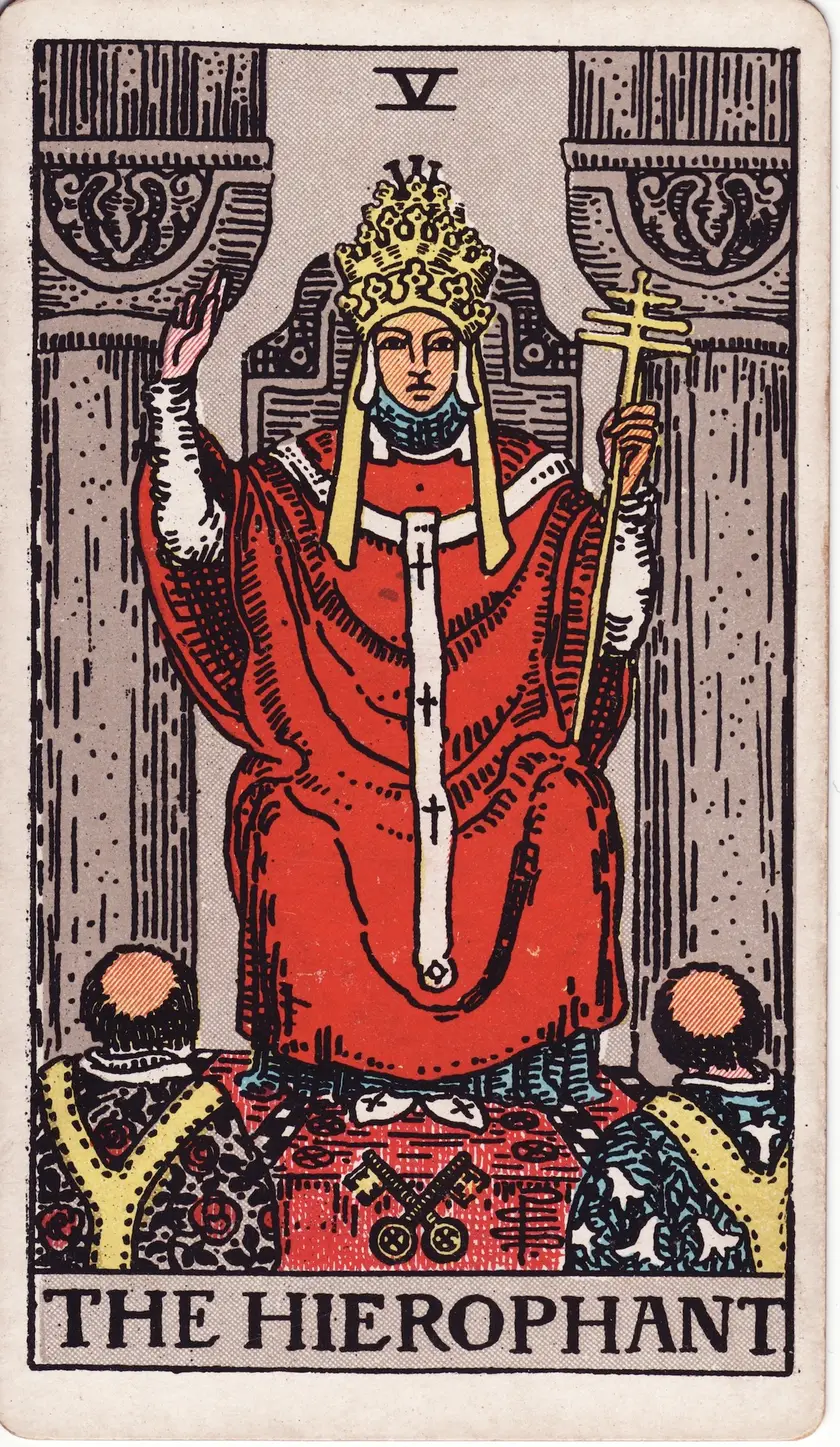
A religious figure sits on an ornate stone throne between two plain grey pillars. He wears red and white ceremonial robes, a three-tiered golden crown, and white pallium bands with small crosses. In his left hand, he holds a tall triple cross; his right hand is raised in a formal blessing. At his feet lie two crossed gold keys over a chequered carpet. In the foreground, two priests kneel before him, one dressed in a robe patterned with red roses and the other in white lilies, listening to his instruction.
The Hierophant upright
The Hierophant points to the comfort and clarity found in proven methods. Rather than inventing your own way forward, you might benefit from leaning on tradition, established institutions, or the counsel of a trusted teacher. This card often appears when you are studying within a formal system, joining an established organisation, or seeking advice from someone with years of practical experience. It asks you to respect what past knowledge has built. You might find reassurance in shared rituals, whether that involves family customs, community groups, or standard professional guidelines. This is less about blind obedience and more about acknowledging that some rules exist to protect and teach. If you feel lost, the answer might lie in a classic handbook, an accredited course, or a conversation with an older mentor. Following the standard path can give you the solid ground you need right now.
The Hierophant reversed
A reversed card is one that landed upside down and usually means the card's quality is blocked, delayed or turned inward. With the Hierophant reversed, the established path may feel rigid or suffocating. You might find yourself questioning dogma, family traditions, or workplace procedures that no longer make sense. Advice from authority figures can feel out of touch with your reality. This card can show a strong pull to rebel and build your own code of ethics, stepping away from orthodox groups or formal schooling. It can also point to dogmatic thinking within yourself, where holding too tightly to old beliefs keeps you from growing. While breaking tradition can bring freedom, it helps to pause and ask what those rules were originally meant to protect before you discard them entirely. Finding your own way takes courage, but you do not have to reject every lesson from the past to stay true to yourself.
Is The Hierophant in your own draw?
Ask a real question, draw three cards, and read what this card means next to the others. Free, and we check back in a week later.
Ask the cards about your own situationIn love and relationships
In relationships, the Hierophant upright often speaks to shared core values, commitment, and traditional milestones like marriage or public declarations. It suggests security built on mutual respect and shared background. Reversed, the card can signal tension over differing beliefs, family pressure to conform, or a relationship that feels trapped by outdated expectations. You might feel ready to write your own relationship rules rather than copying what worked for your parents.
In career and work
At work, this card upright points to success within established structures, corporate hierarchies, or educational settings. Working with a mentor, following company protocol, or completing professional certifications can serve you well. Reversed, you may clash with office politics, rigid management, or outdated procedures. It can show a desire to leave a conventional career track to work for yourself or pursue a non-traditional line of work.
Around money
The Hierophant reflects a preference for conventional financial habits. You might feel drawn to traditional savings accounts, established banks, or cautious, standard approaches rather than risky schemes. Money here is tied to long-term stability and following the book. Reversed, it can reflect anxiety about whether traditional financial milestones still apply to your life, or a temptation to bypass standard systems altogether.
A reading about money looks at how you feel and what you tend to do. Decisions about money belong with a financial adviser.
When it answers your question
When this card answers a question about study or skill building, it suggests signing up for a formal course or seeking an accredited teacher. If your question is about a difficult personal decision, it asks what the established wisdom or family values say about the matter. When asked about conflict, it suggests bringing in an agreed framework, policy, or neutral mediator.
One thing to watch for
If you catch yourself asking what other people might think before deciding what is right for you, that may be the Hierophant talking. Notice whether you are leaning on an established rule because it helps you, or simply because you feel afraid to make up your own mind.
Every Unfold reading ends with a sign like this, and the check-in a week later asks whether you noticed it. How a reading is made
Is The Hierophant a yes or no card?
Upright, The Hierophant leans Yes; reversed, Maybe / not yet. The Hierophant leans yes. His right hand is raised in a formal blessing, and two crossed keys wait at his feet. This image suggests that leaning on established standards, seeking experienced advice, and working through approved channels can support your situation. Ask the yes or no tarot.
The Hierophant with other cards
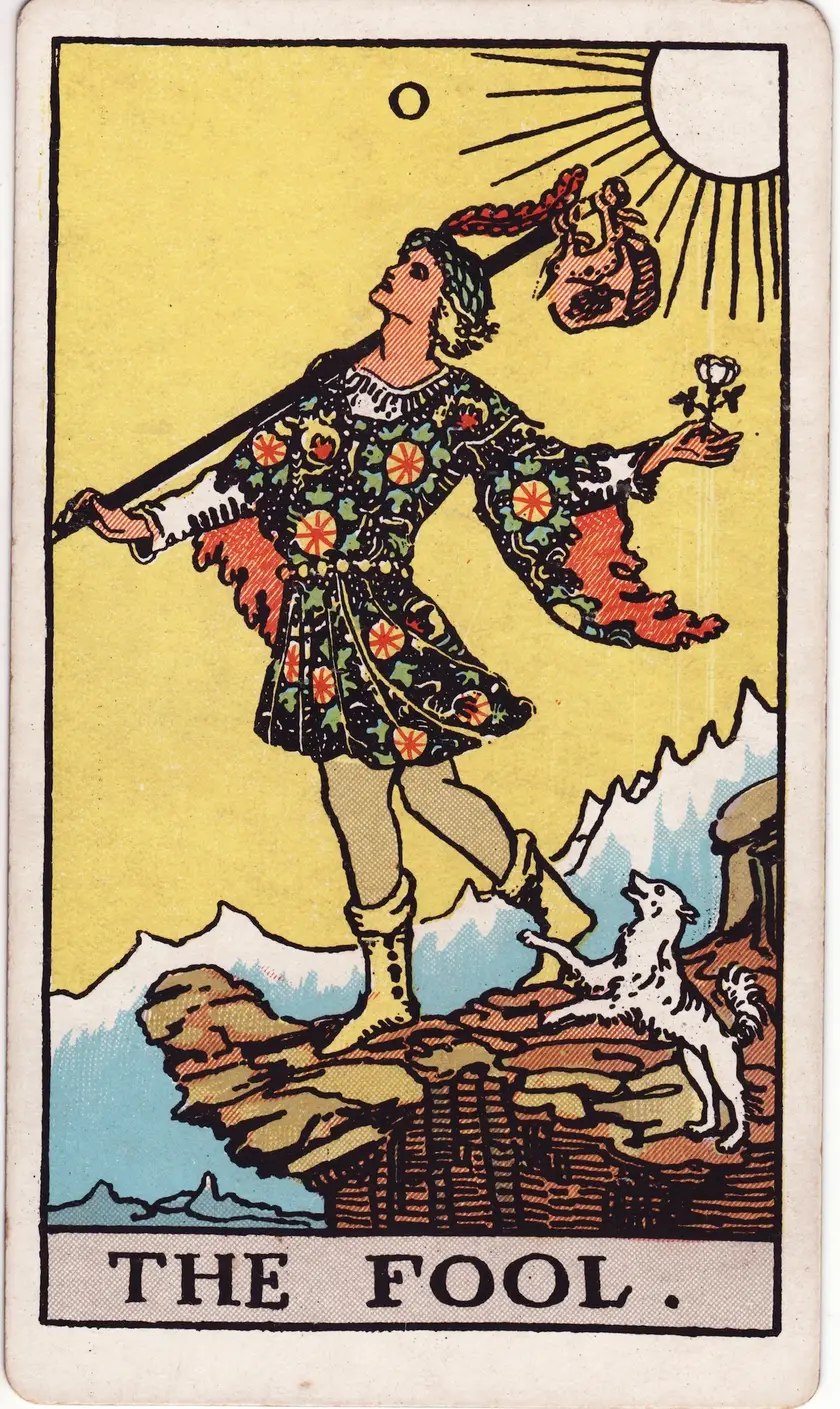 The FoolTogether, they reflect the tension between breaking completely free into the unknown and staying safe inside trusted traditions.Read the pair
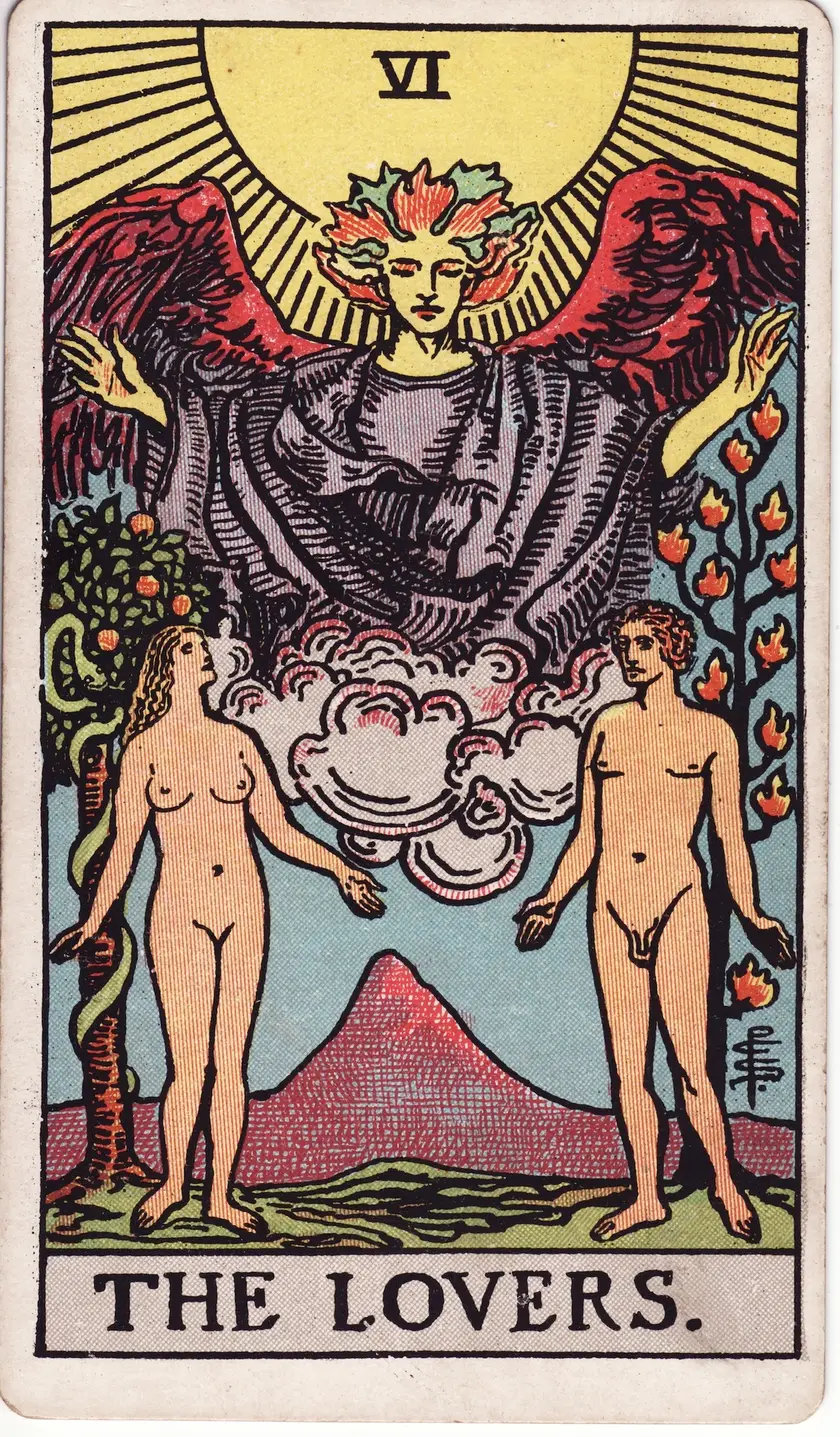 The LoversThis pair points to choices around commitment, asking whether your relationships align with your deepest shared values.Read the pair
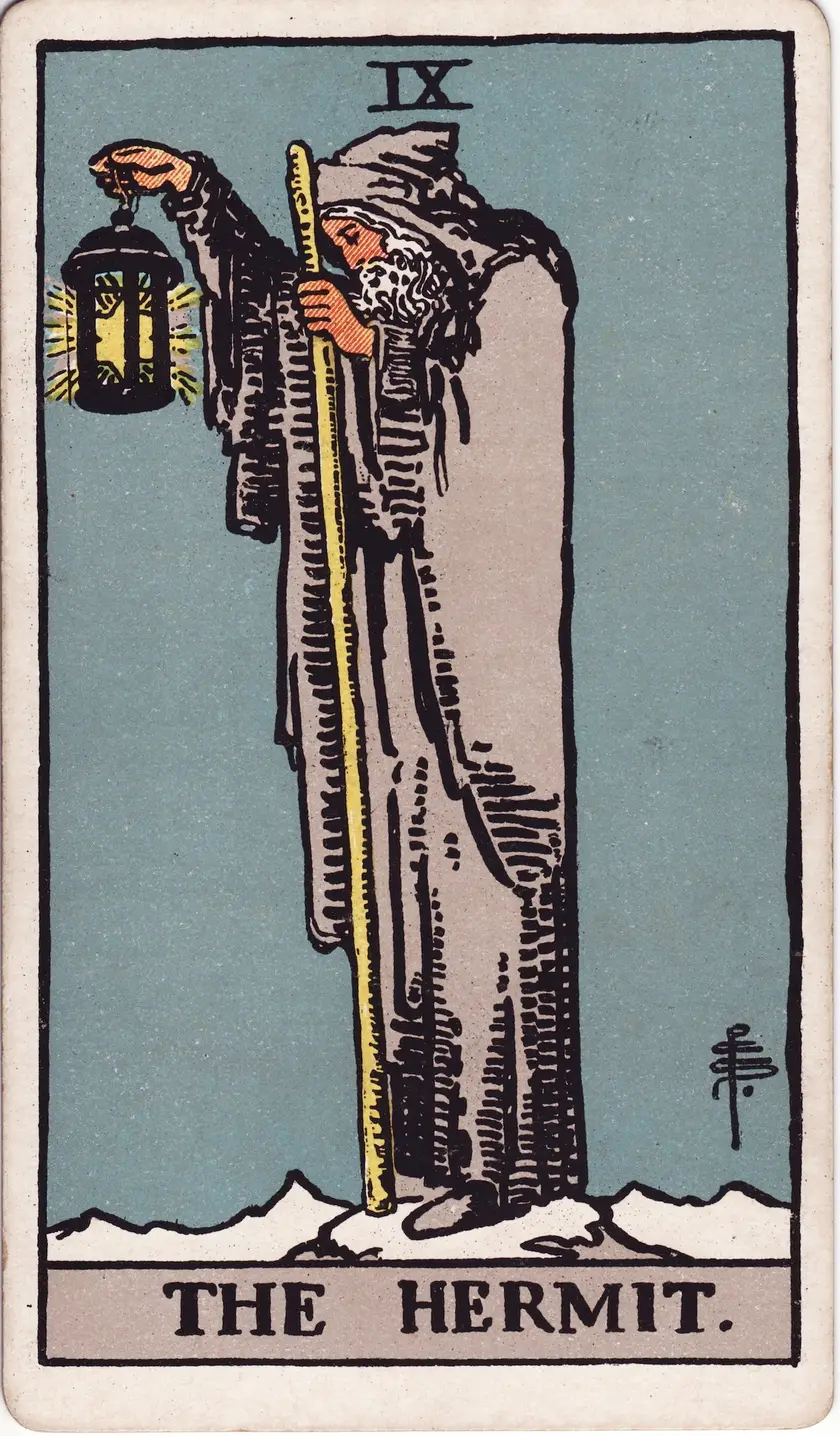 The HermitThese cards show a shift between learning from social institutions and withdrawing to find personal truth on your own.Read the pair
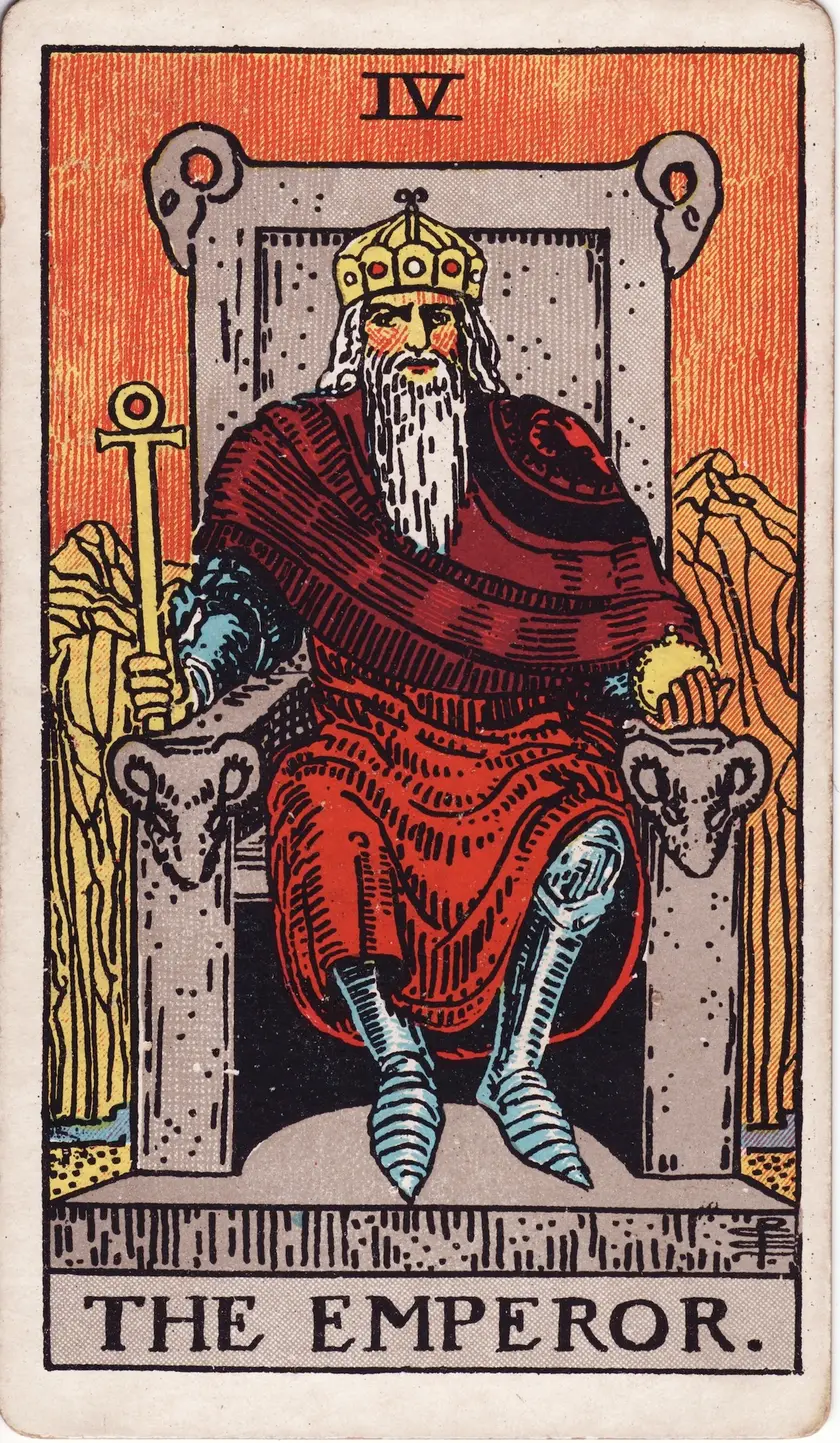 The Emperorauthority, structure, stability
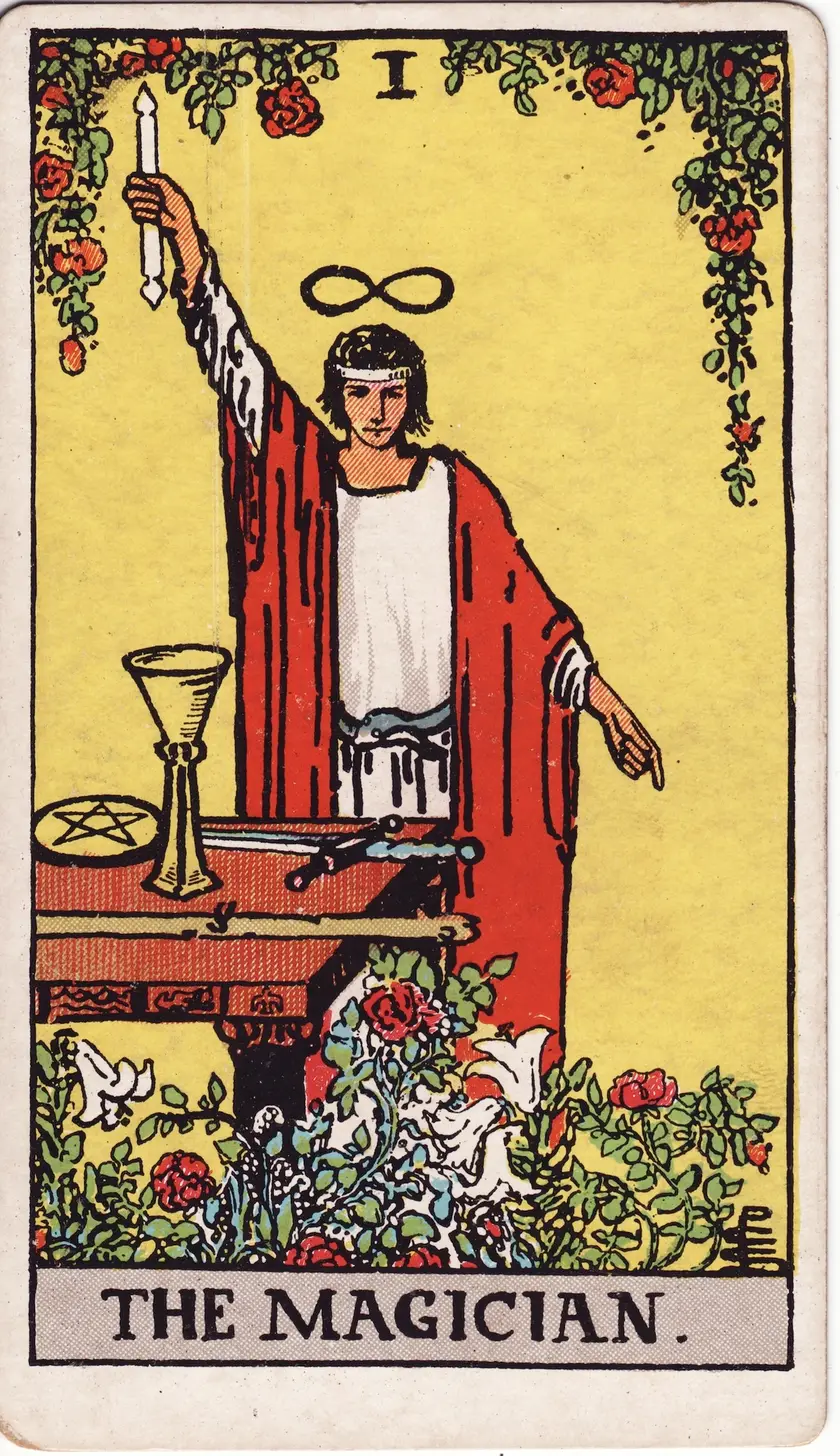 The Magicianwillpower, skill, manifestation
Questions about The Hierophant
- Is the Hierophant always about religion?
- No. While the image uses religious robes, the card represents any established system. It covers universities, corporate cultures, legal bodies, family traditions, or formal mentorship.
- What do the crossed keys mean on the card?
- The two crossed keys sit at the foot of the throne. They represent access to shared knowledge, acquired through steady learning, mentorship, and respect for tradition.
- Does the Hierophant mean marriage?
- It can point to traditional ceremonies and public commitments, but it more broadly reflects shared ethics, formal contracts, and deep mutual agreement between two people.
Is The Hierophant in your own draw?
Ask a real question, draw three cards, and read what this card means next to the others. Free, and we check back in a week later.
Ask the cards about your own situation