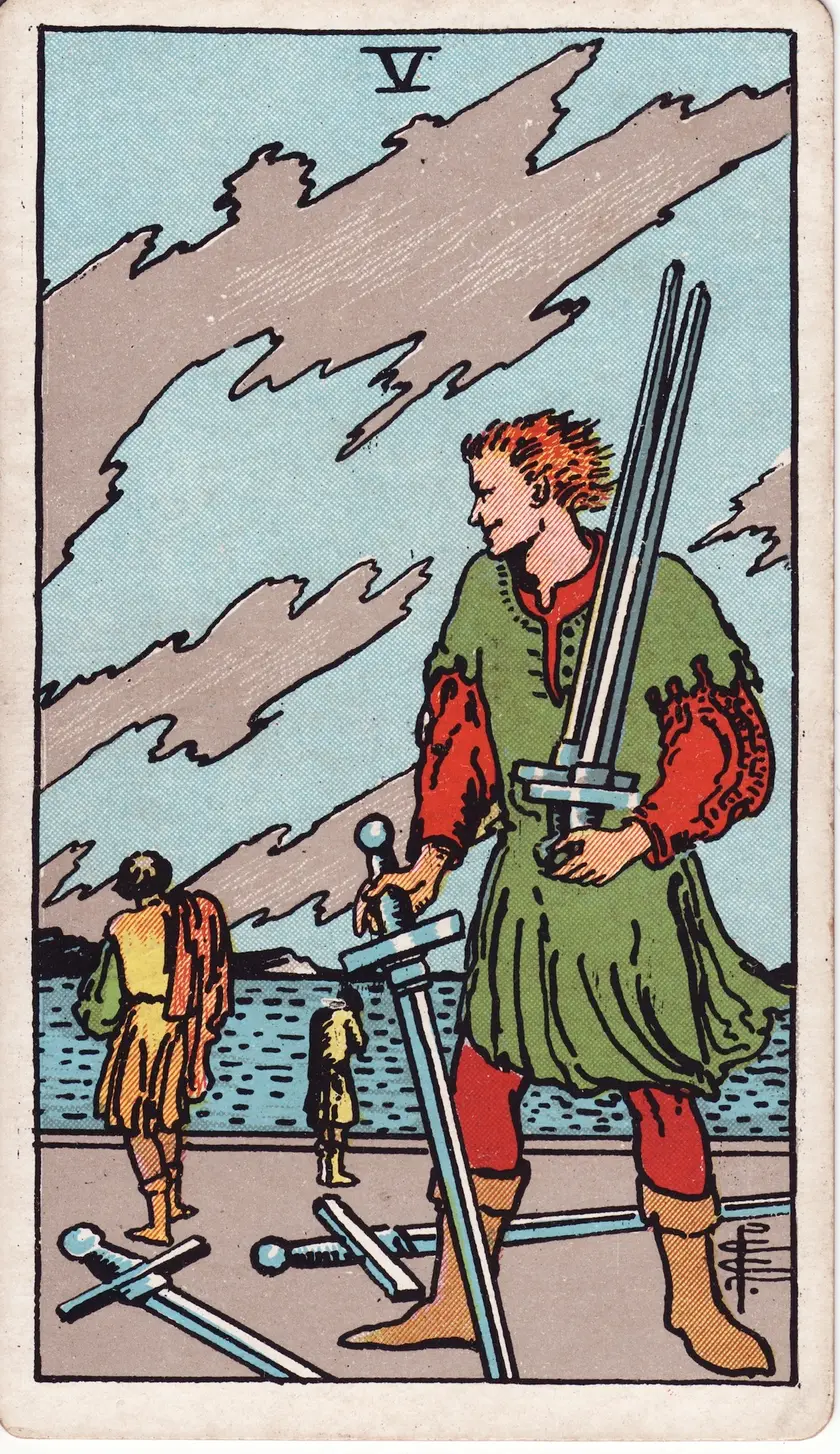
In the picture
A man in the foreground holds three swords and looks over his shoulder with a slight smirk. Two more swords lie abandoned on the grass at his feet. In the background, two figures walk away toward a body of water, their heads down in dejection, one with hands covering their face. The sky above is choppy with jagged, windblown clouds. The scene suggests a skirmish that has just ended, leaving one person in possession of the weapons while everyone else leaves defeated and hurt.
Five of Swords upright
The Five of Swords appears when tension spills into outright conflict, leaving bruised egos and broken trust. It often reflects a hollow victory. You might prove your point, outsmart a rival, or win a clash of wills, yet find yourself standing alone in the aftermath. The cost of being right can be higher than the satisfaction of winning.
This card can describe an argument where harsh words are spoken just to inflict pain. It may point to a competitive workplace where someone cuts corners or undermines others to get ahead. It can also show up when you feel defeated, having backed down from a fight you could not win. In every case, it asks you to look at the battlefield. Ask yourself if defending your pride is worth damaging a connection that matters. Walking away from an argument is sometimes stronger than scoring the final point.
Five of Swords reversed
A reversed card is one that landed upside down and usually means the card's quality is blocked, delayed or turned inward. With the Five of Swords reversed, the drive to fight begins to fade. You might realize that an ongoing grudge is only draining you, leading you to lay down your weapons.
This card upside down often signals an opportunity to make amends. An apology could be offered, or someone might finally agree to listen instead of defend themselves. It can also point to conflict turned inward, where you replay past arguments in your head and punish yourself for what was said. At other times, it reflects a situation where resentment lingers under the surface even though the open fighting has stopped. If you have been clinging to bitterness, this card suggests it may be time to let the dispute go and move on.
Is Five of Swords in your own draw?
Ask a real question, draw three cards, and read what this card means next to the others. Free, and we check back in a week later.
Ask the cards about your own situationIn love and relationships
In love, the Five of Swords upright warns of fights where the main goal is hurting the other person rather than solving a problem. Snide comments, defensiveness, and a stubborn need to always have the last word can slowly wear down affection between partners. Reversed, it suggests a willingness to put down defenses, offer an honest apology, or let an old grievance rest so genuine healing can finally start.
In career and work
At work, the Five of Swords upright points to sharp office politics, cutthroat rivalry, or feeling undercut by colleagues. Someone may take credit unfairly, push others aside, or win a heated argument at the entire team's expense. The atmosphere can feel suspicious and harsh. Reversed, it often marks the end of an exhausting feud, an agreement to cooperate again, or a clear choice to walk away from a toxic workplace culture.
Around money
Around money, this card can reflect stressful disputes over shared resources, split bills, or business contracts. It points to feelings of greed, bitter resentment, or feeling cheated after an unfair deal. Winning a financial settlement might still feel empty if important relationships ended over it. Reversed, it can show a sincere desire to settle old debts, forgive monetary quarrels, or release long-held bitterness about past financial mistakes.
A reading about money looks at how you feel and what you tend to do. Decisions about money belong with a financial adviser.
When it answers your question
When this card answers a question about an argument, it warns that winning the fight might cost you the relationship. When asked about a decision to walk away, it suggests leaving a toxic clash behind could save your peace of mind. When drawn about a goal, it asks if the methods you are using harm others along the way.
One thing to watch for
If you catch yourself planning your next sharp comeback while someone else is still speaking, or feeling smug about proving a friend wrong, that may be the Five of Swords talking.
Every Unfold reading ends with a sign like this, and the check-in a week later asks whether you noticed it. How a reading is made
Is Five of Swords a yes or no card?
Upright, Five of Swords leans No; reversed, No. The card leans no. In the picture, defeated figures walk away in tears under ragged clouds while a solitary winner smirks alone. Even if you achieve your aim right now, the aftermath could bring isolation, bitterness, and lasting regret. Ask the yes or no tarot.
Five of Swords with other cards
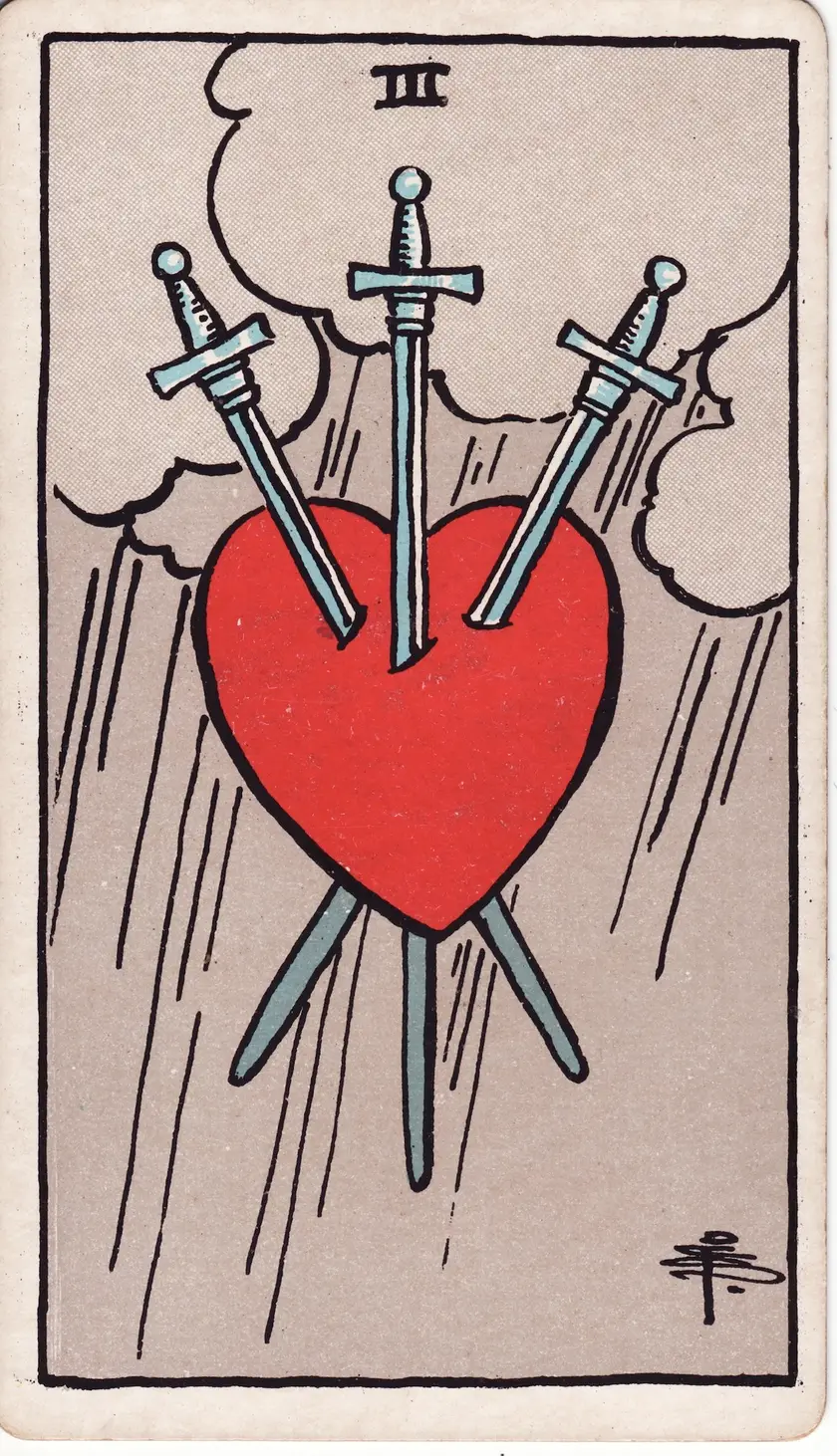 Three of SwordsTogether, these cards point to painful words that lead directly to deep emotional hurt or heartbreak.Read the pair
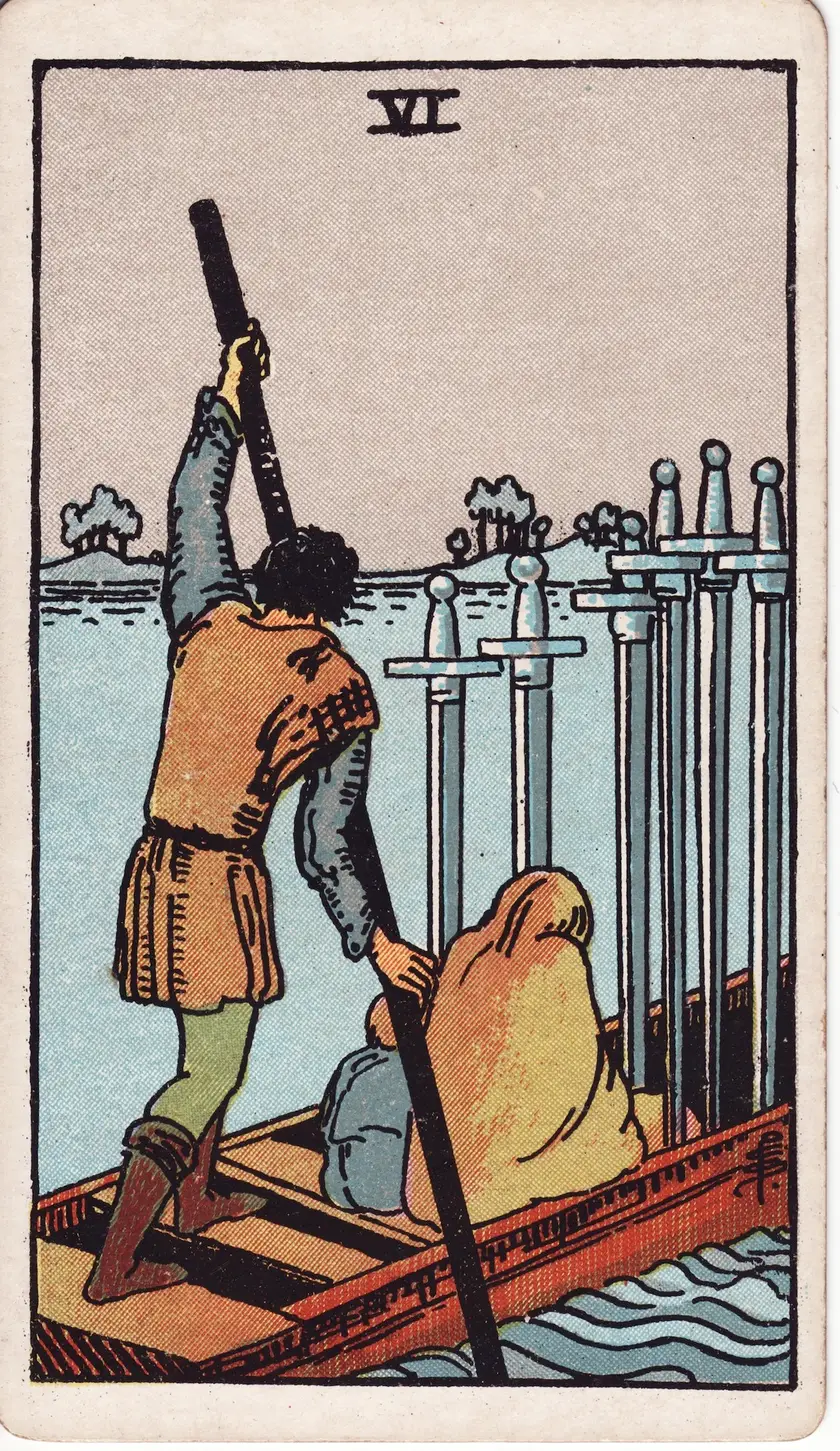 Six of SwordsThis pair suggests leaving a bitter conflict behind and moving toward calmer waters.Read the pair
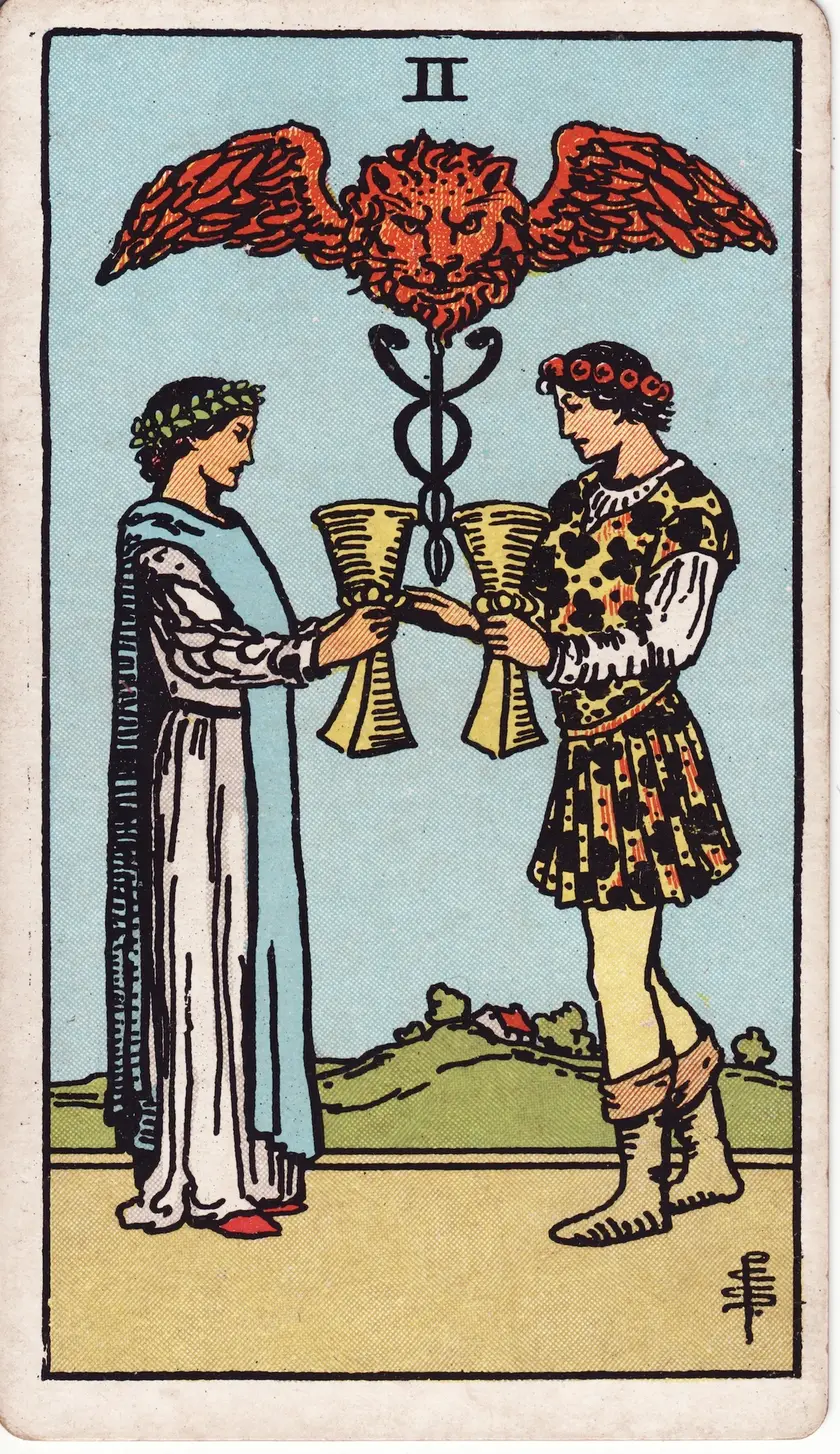 Two of CupsA partnership may be under severe strain from competitive friction or sharp disagreements.Read the pair
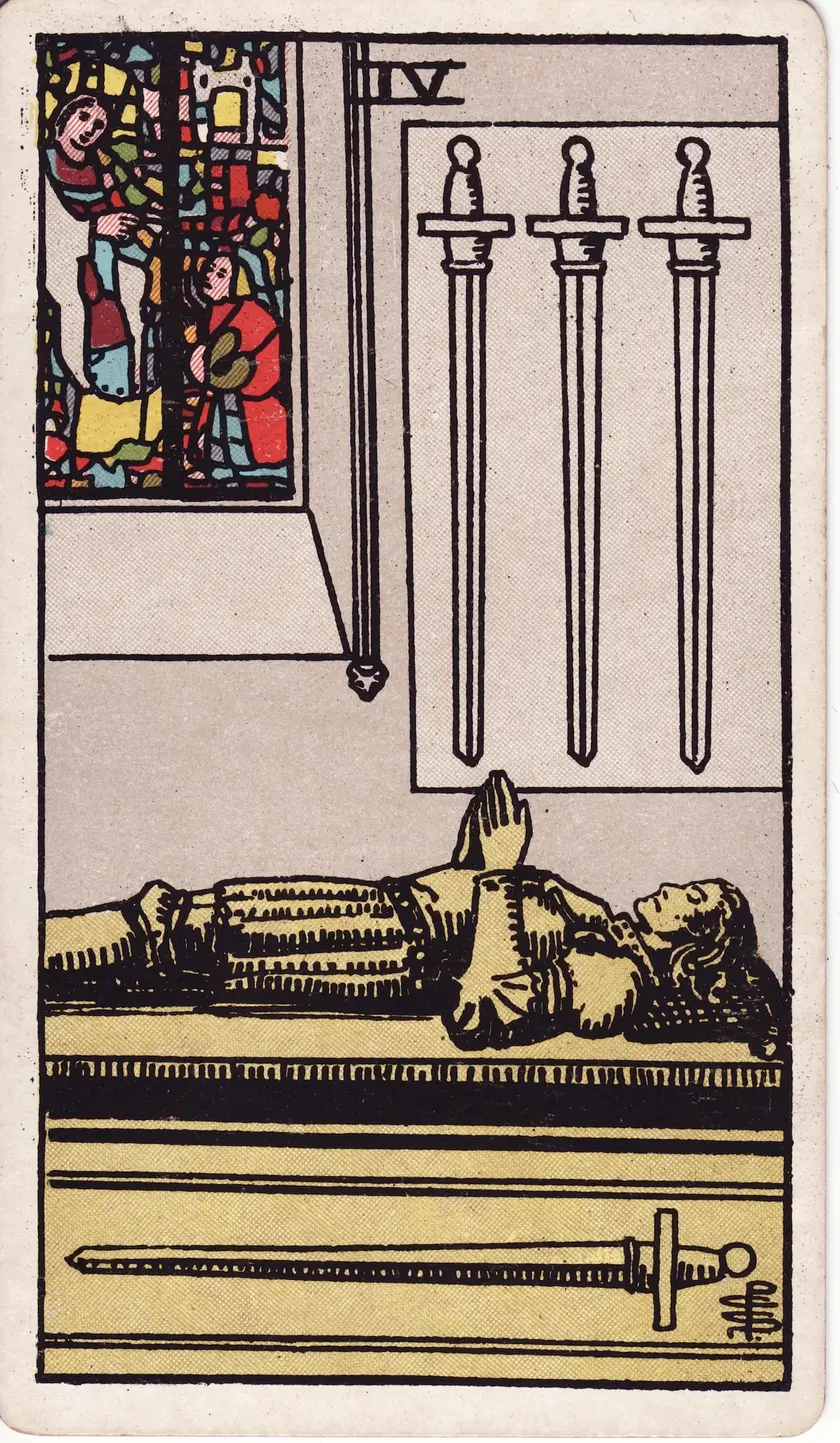 Four of Swordsrest, recovery, contemplation
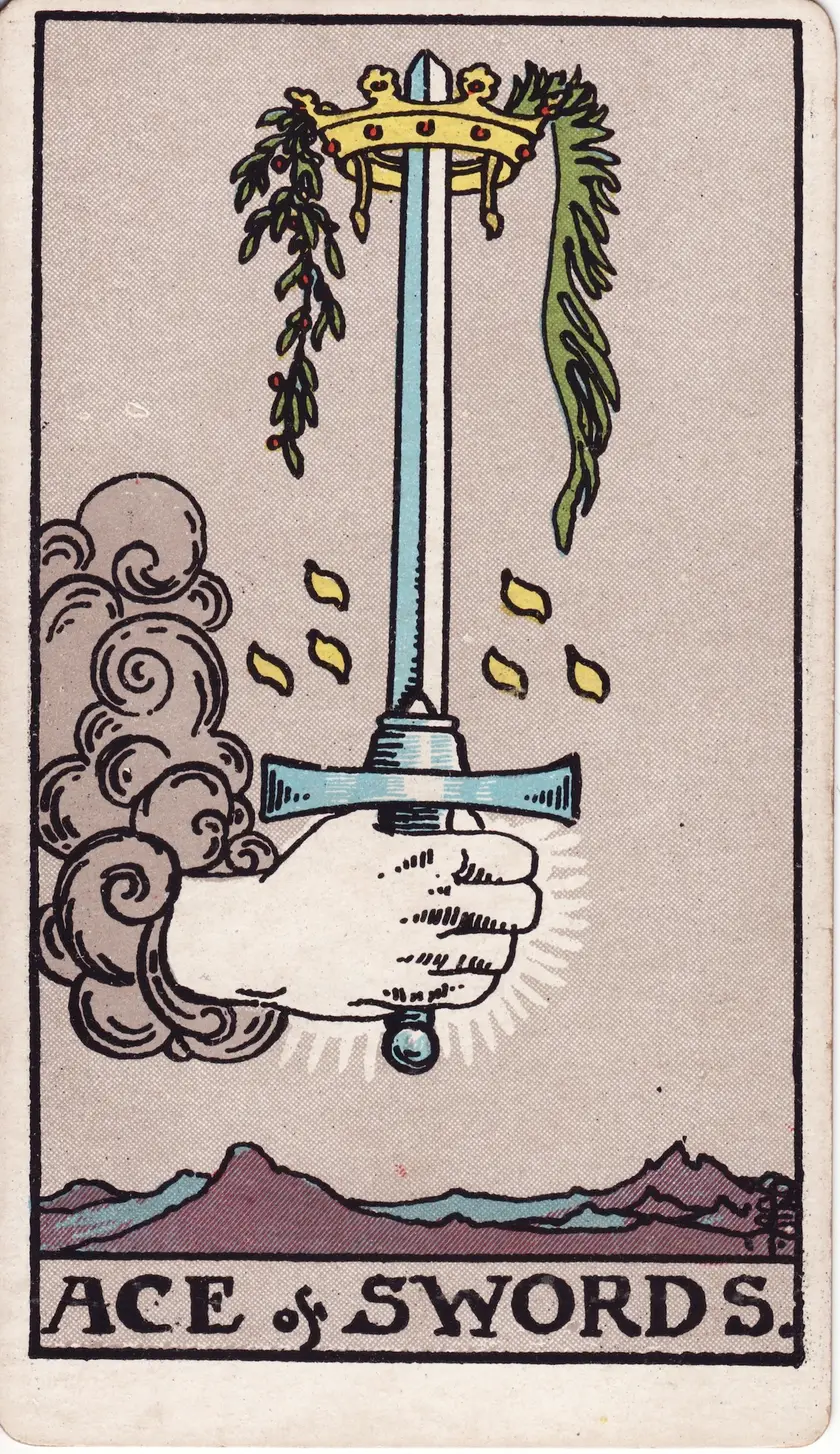 Ace of Swordsclarity, truth, breakthrough
Questions about Five of Swords
- Does the Five of Swords mean betrayal?
- It can suggest unfair tactics or feeling undermined by someone. More often, it simply reflects selfish behavior, stubborn pride, and clashes where people care more about winning than treating each other fairly.
- Am I the winner or the loser in this card?
- You could be either. The card asks you to consider whether you are the one gloating over a hollow win, or the one walking away defeated and nursing hurt feelings.
- What is the advice of the Five of Swords?
- Pick your battles carefully. Ask whether proving yourself right is worth the damage it causes. Sometimes stepping back from a fight is the wisest choice you can make.
Is Five of Swords in your own draw?
Ask a real question, draw three cards, and read what this card means next to the others. Free, and we check back in a week later.
Ask the cards about your own situation