The Suit of Swords
Swords are the suit of air: thinking, words, decisions, truth and the conflicts that come with them. The pictures are the starkest in the deck, with grey skies, blades and figures who are bound, grieving or striding away. When Swords lead a spread, the question is being fought in the mind.
The suit opens with the Ace, a clear idea, and moves through stalemate (Two), heartbreak (Three), rest (Four), hollow victory (Five), passage (Six), strategy (Seven), feeling trapped (Eight), anxiety (Nine) and an ending (Ten). The court cards are ways of thinking: curious, quick, clear-eyed, authoritative.
The 14 cards of the Swords
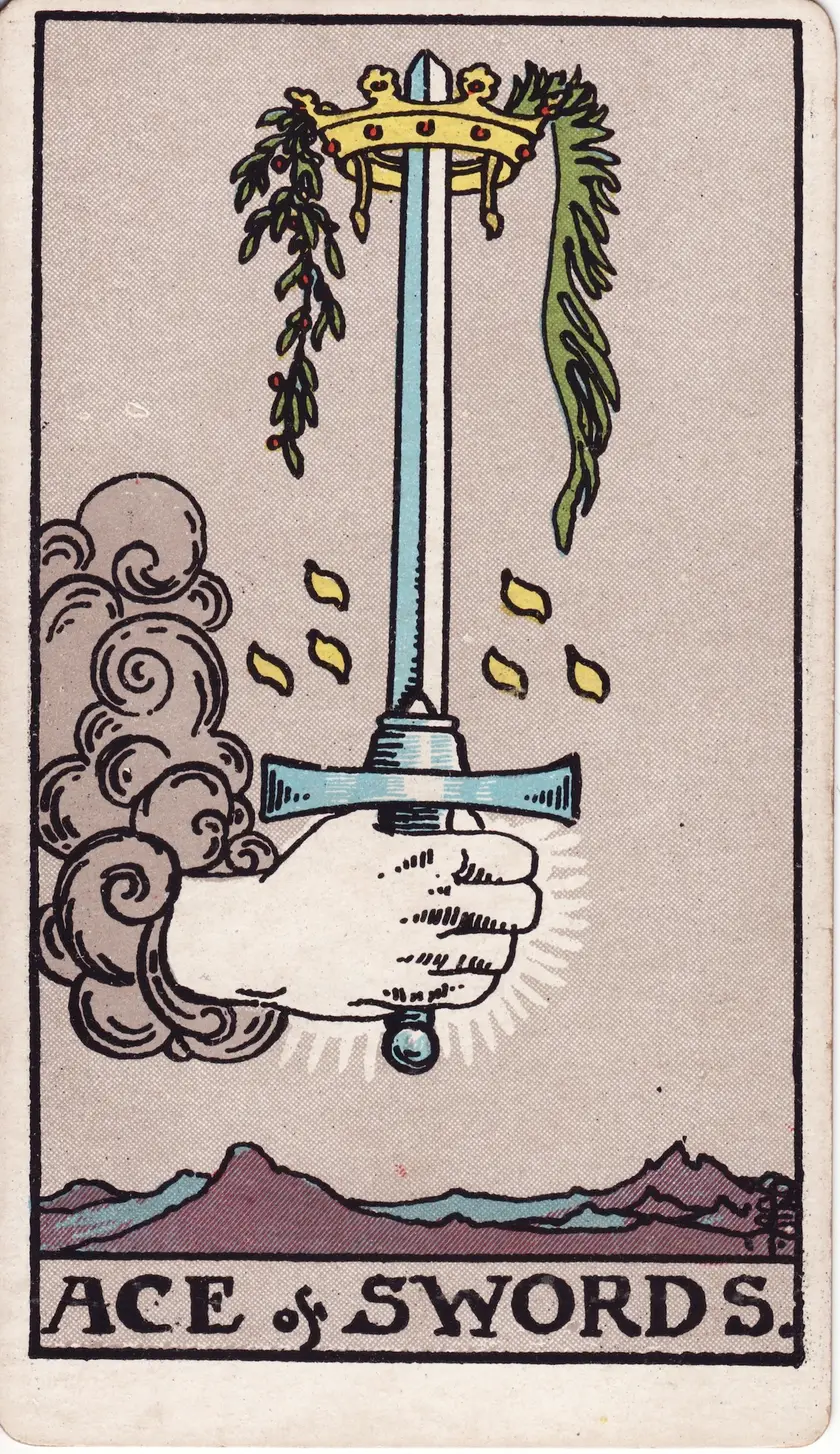 Ace of Swordsclarity, truth
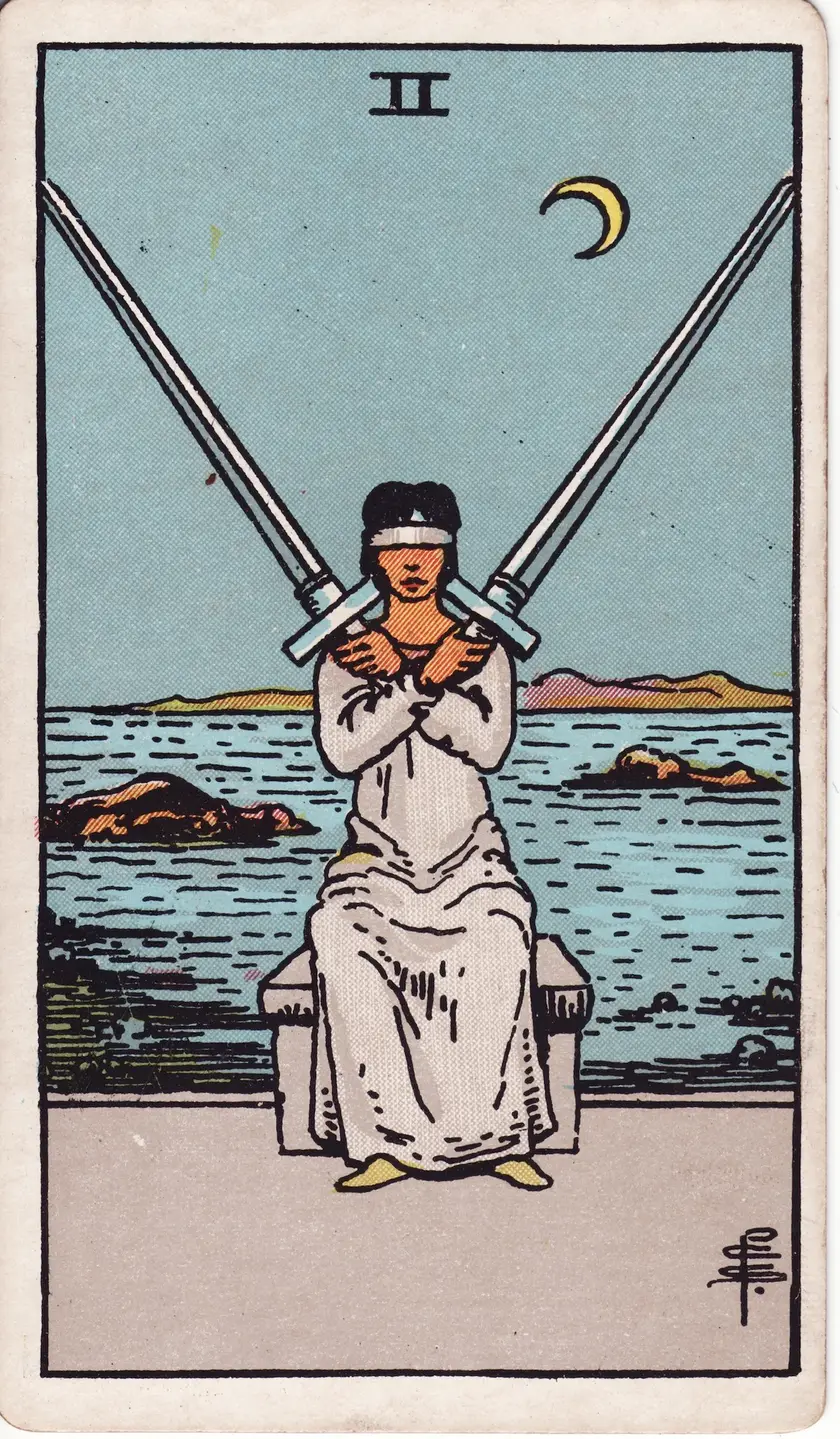 Two of Swordsindecision, stalemate
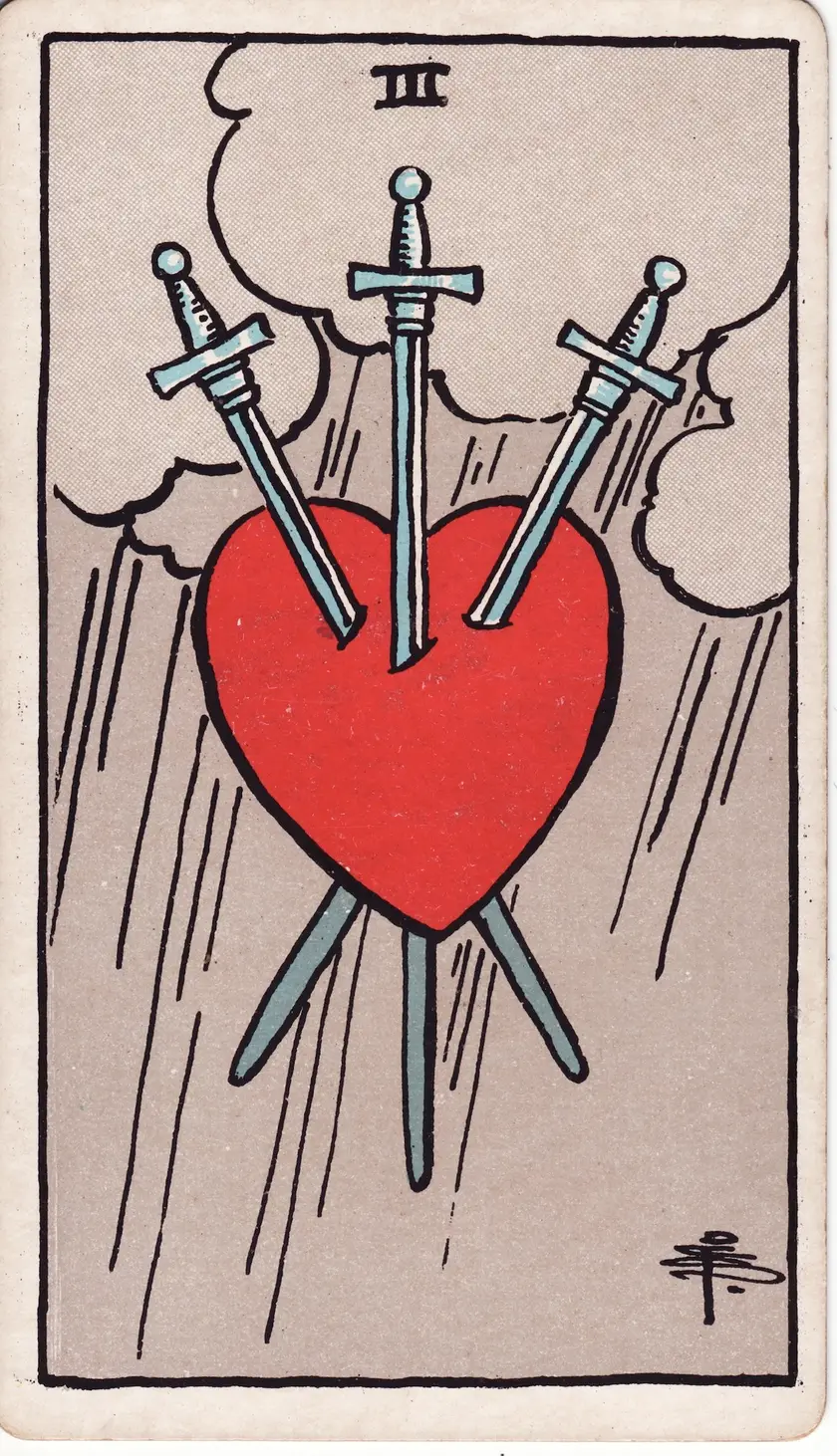 Three of Swordsheartbreak, grief
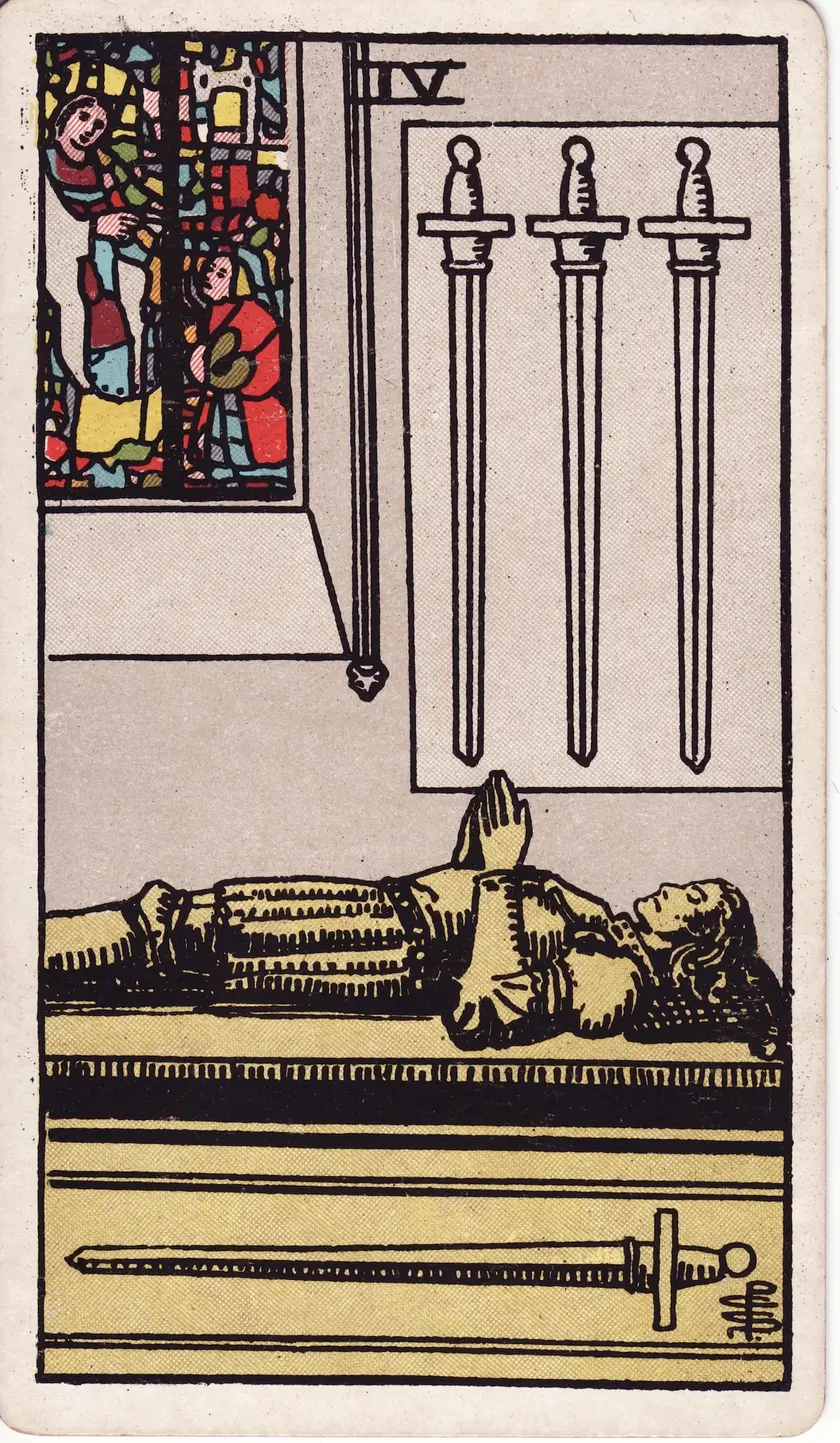 Four of Swordsrest, recovery
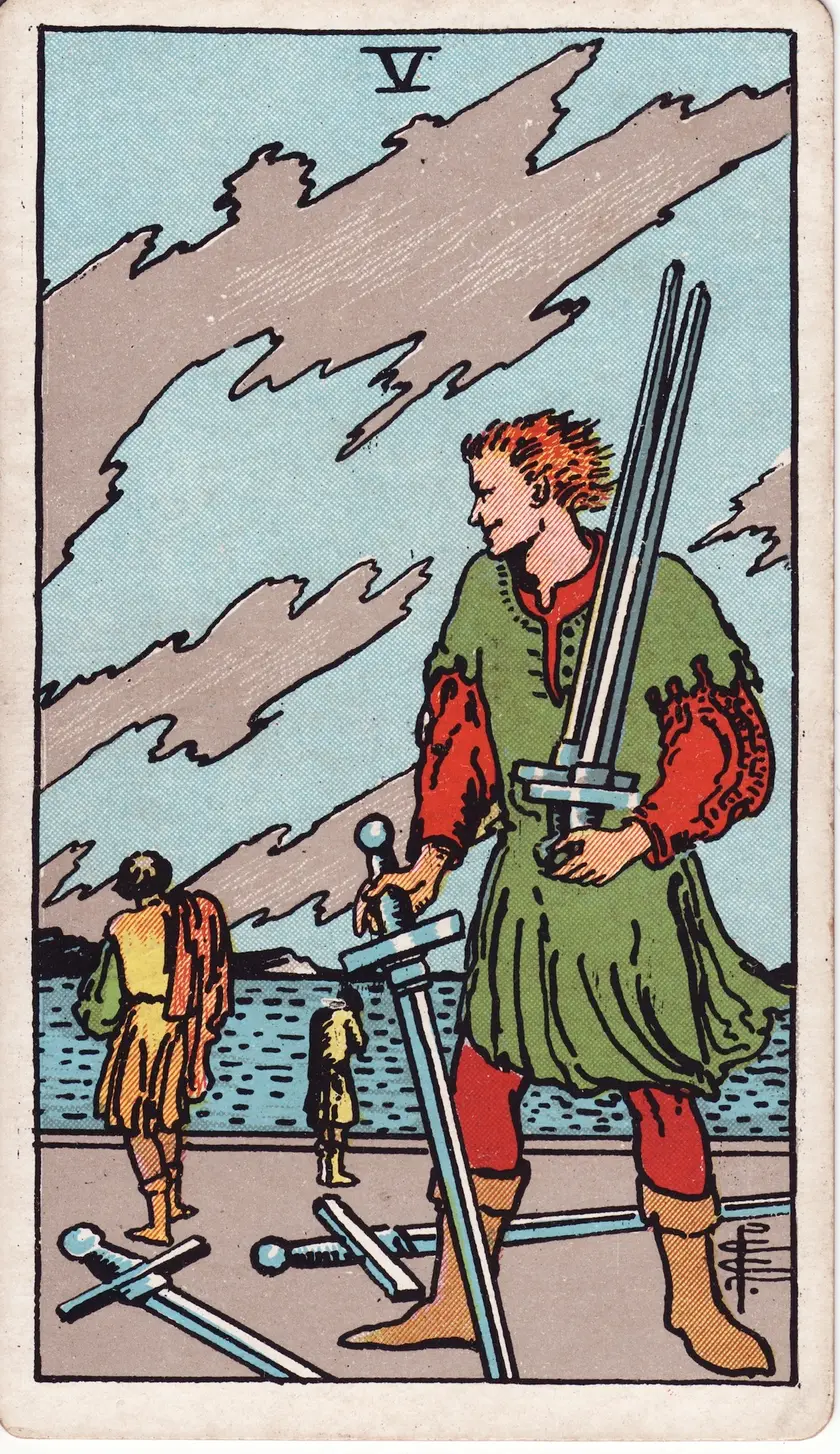 Five of Swordsconflict, winning at a cost
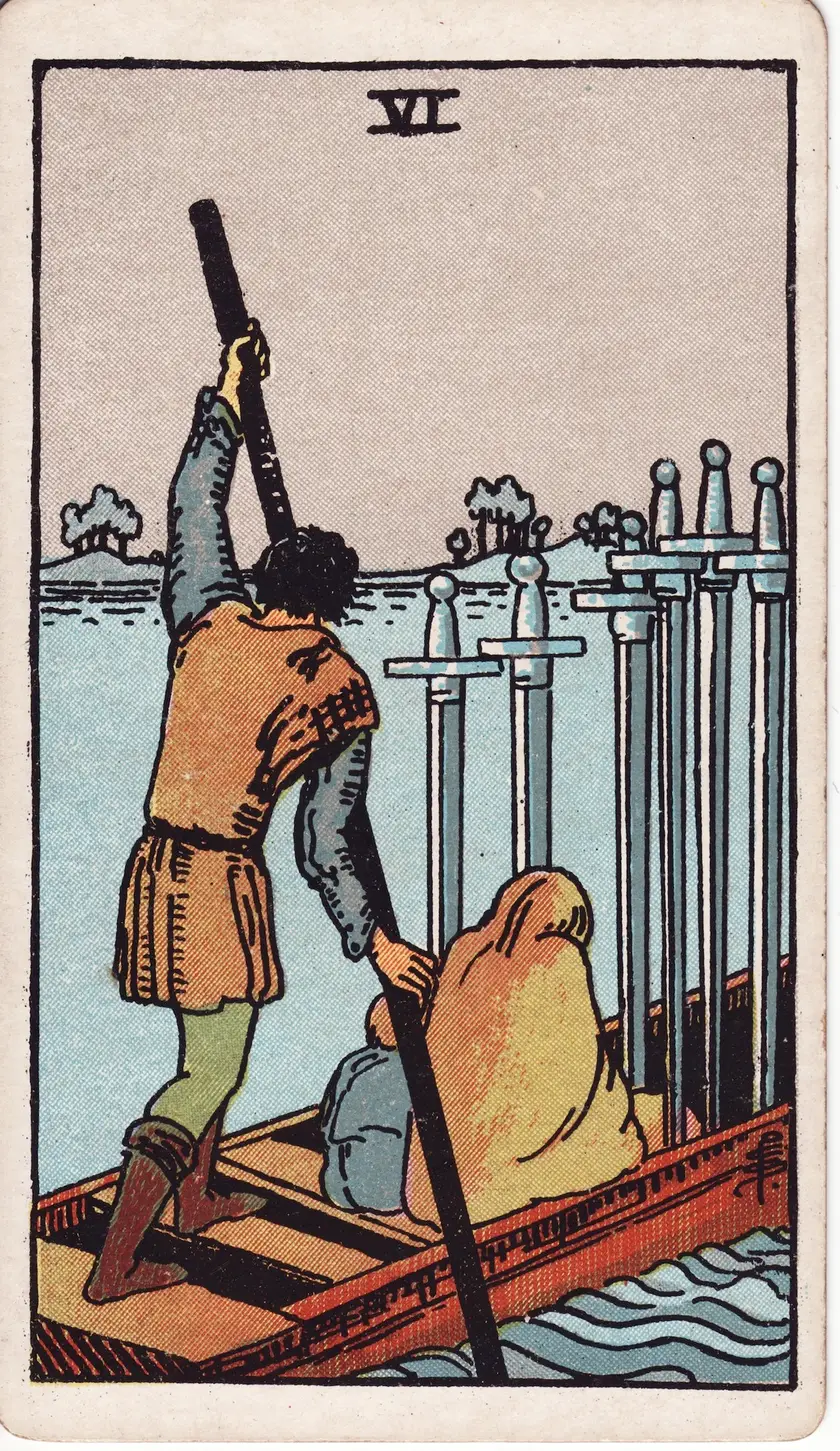 Six of Swordstransition, moving on
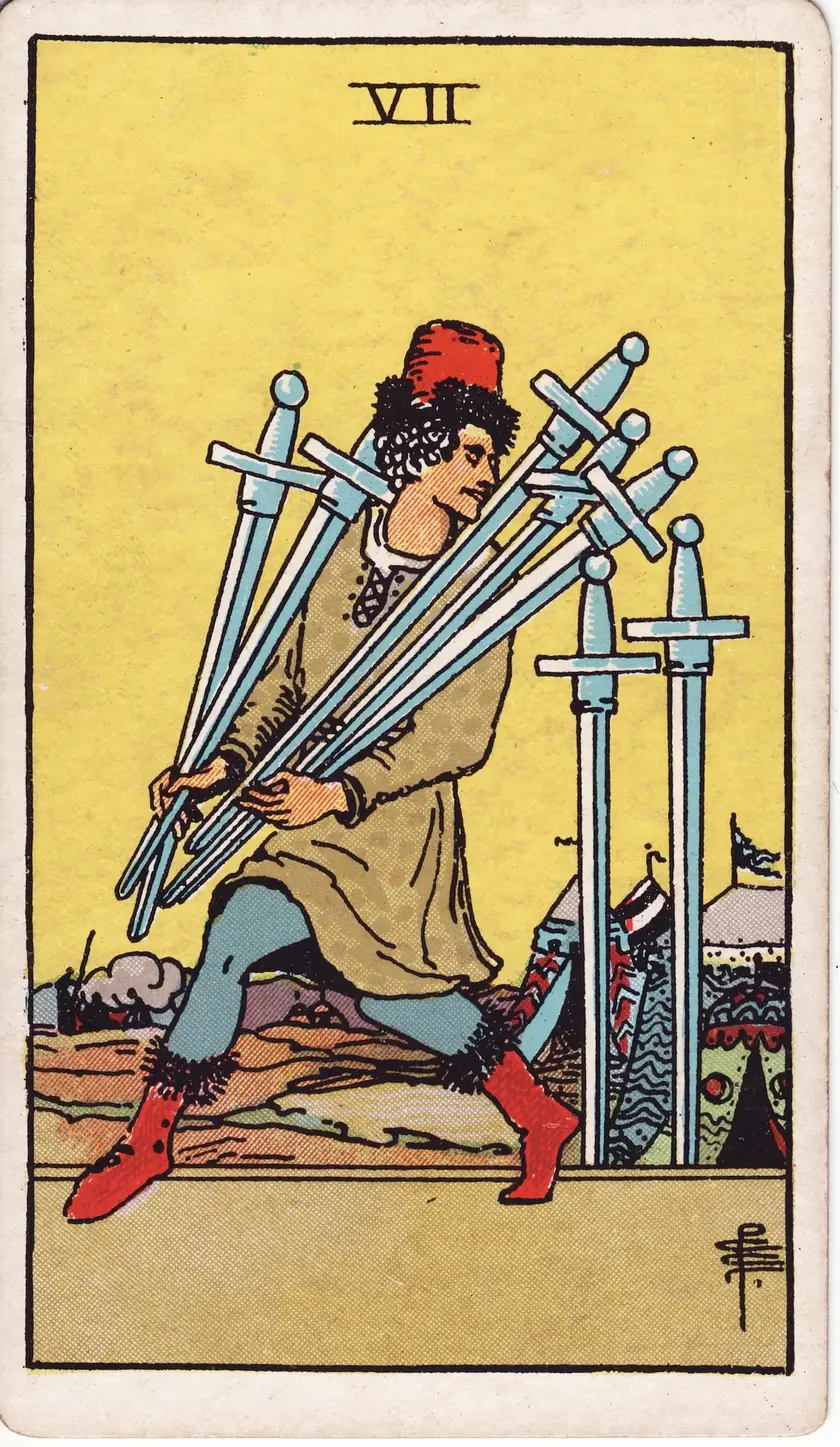 Seven of Swordsdeception, strategy
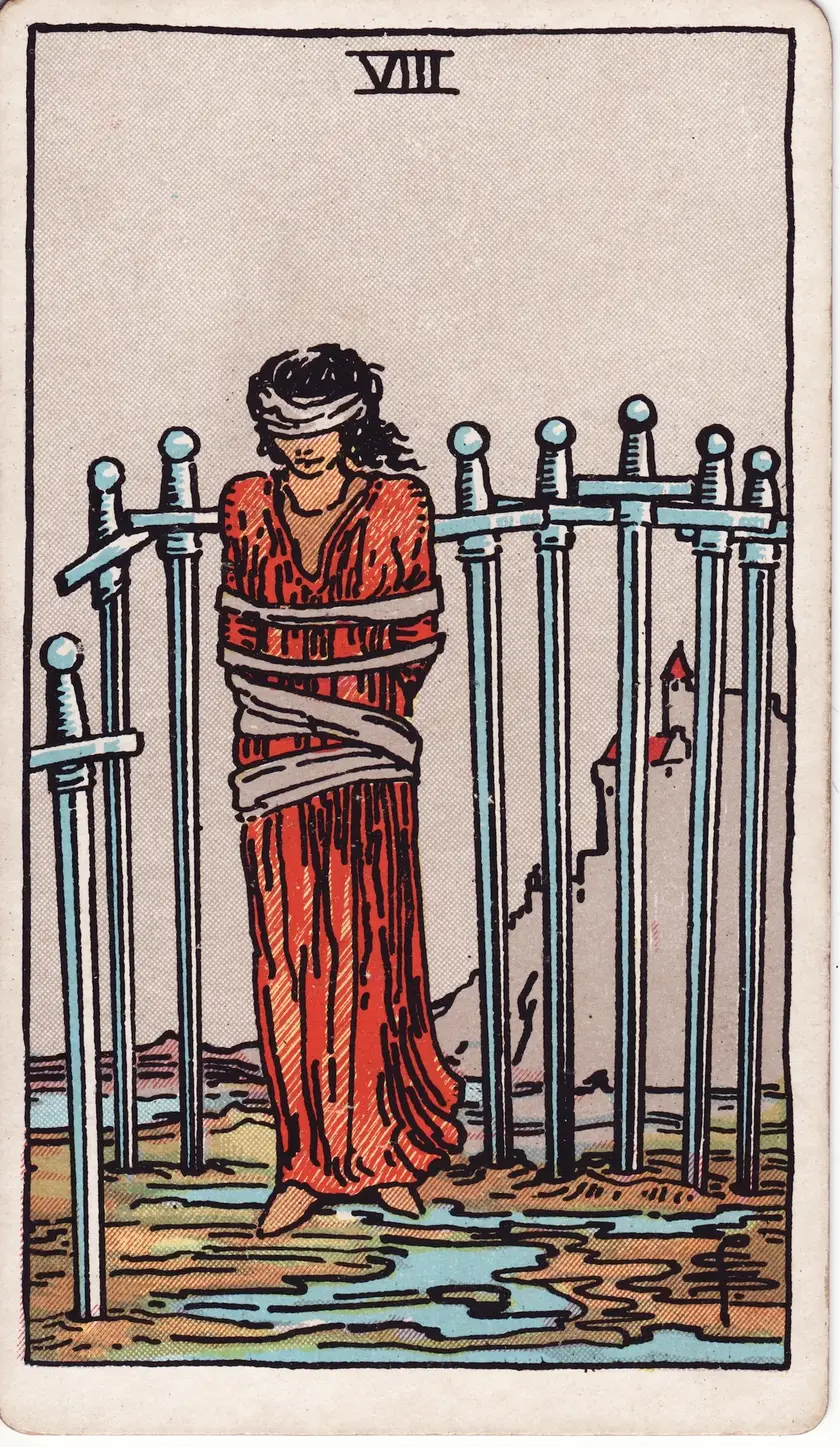 Eight of Swordsrestriction, feeling trapped
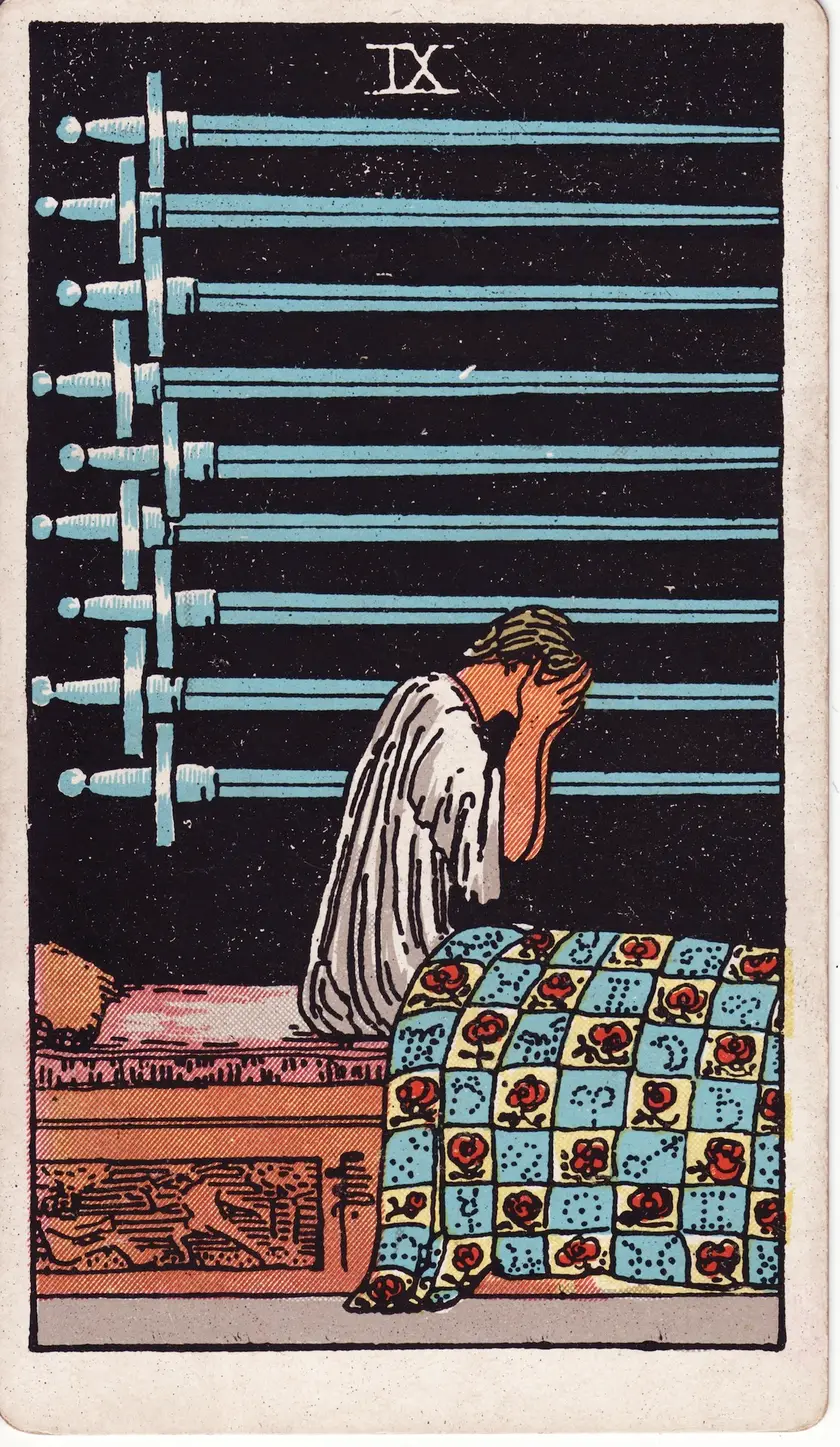 Nine of Swordsanxiety, worry
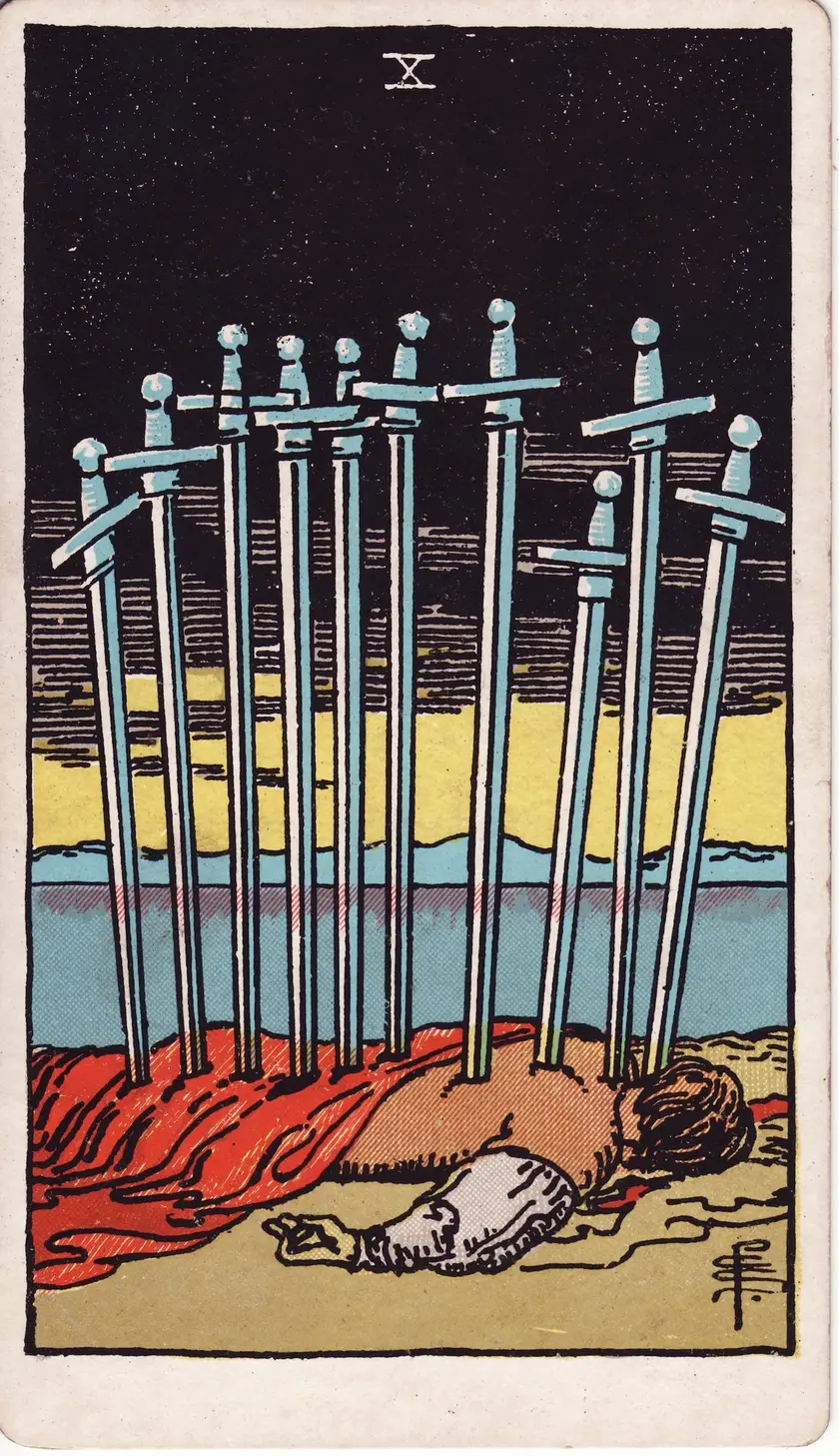 Ten of Swordspainful ending, rock bottom
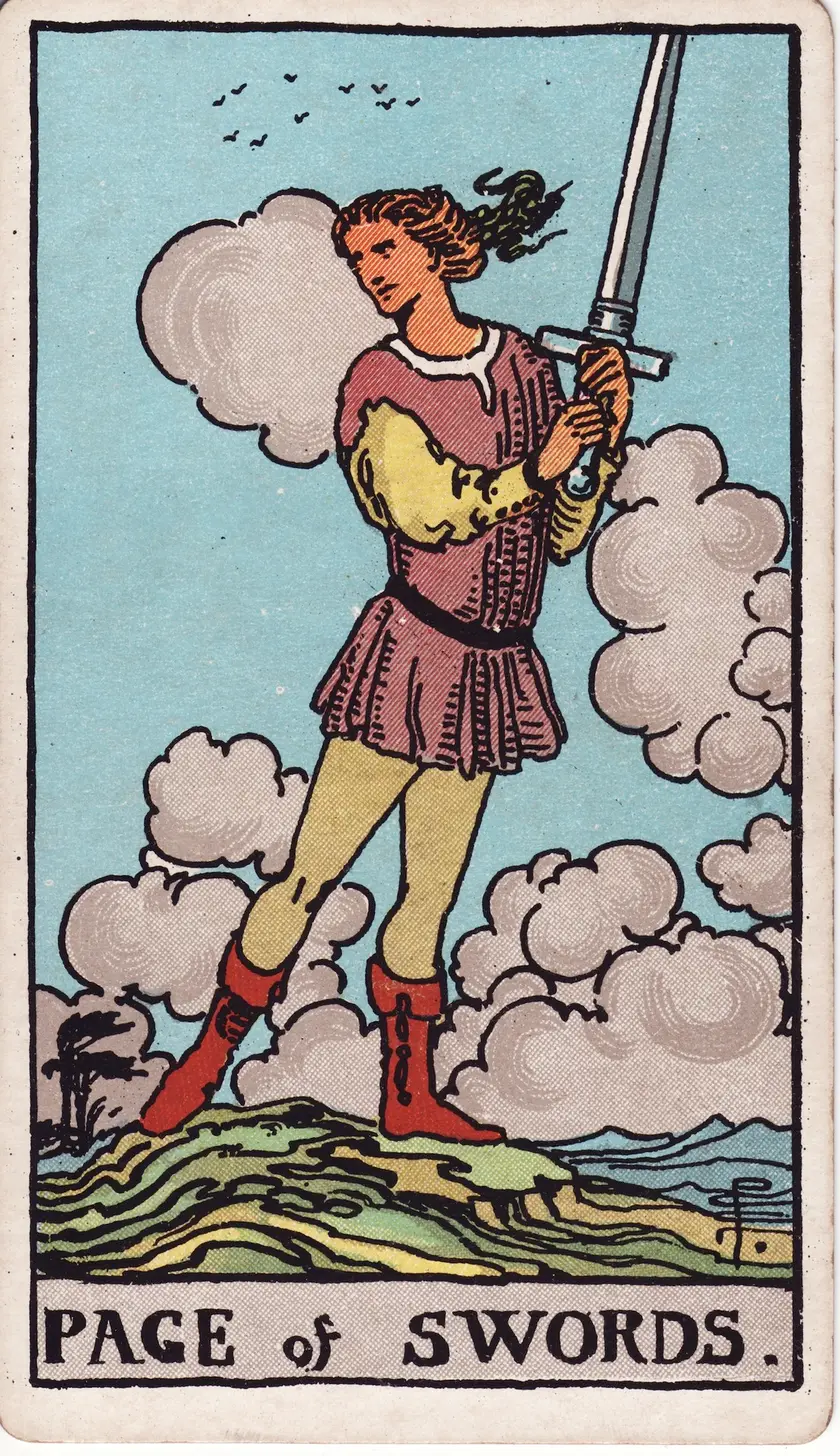 Page of Swordscuriosity, new ideas
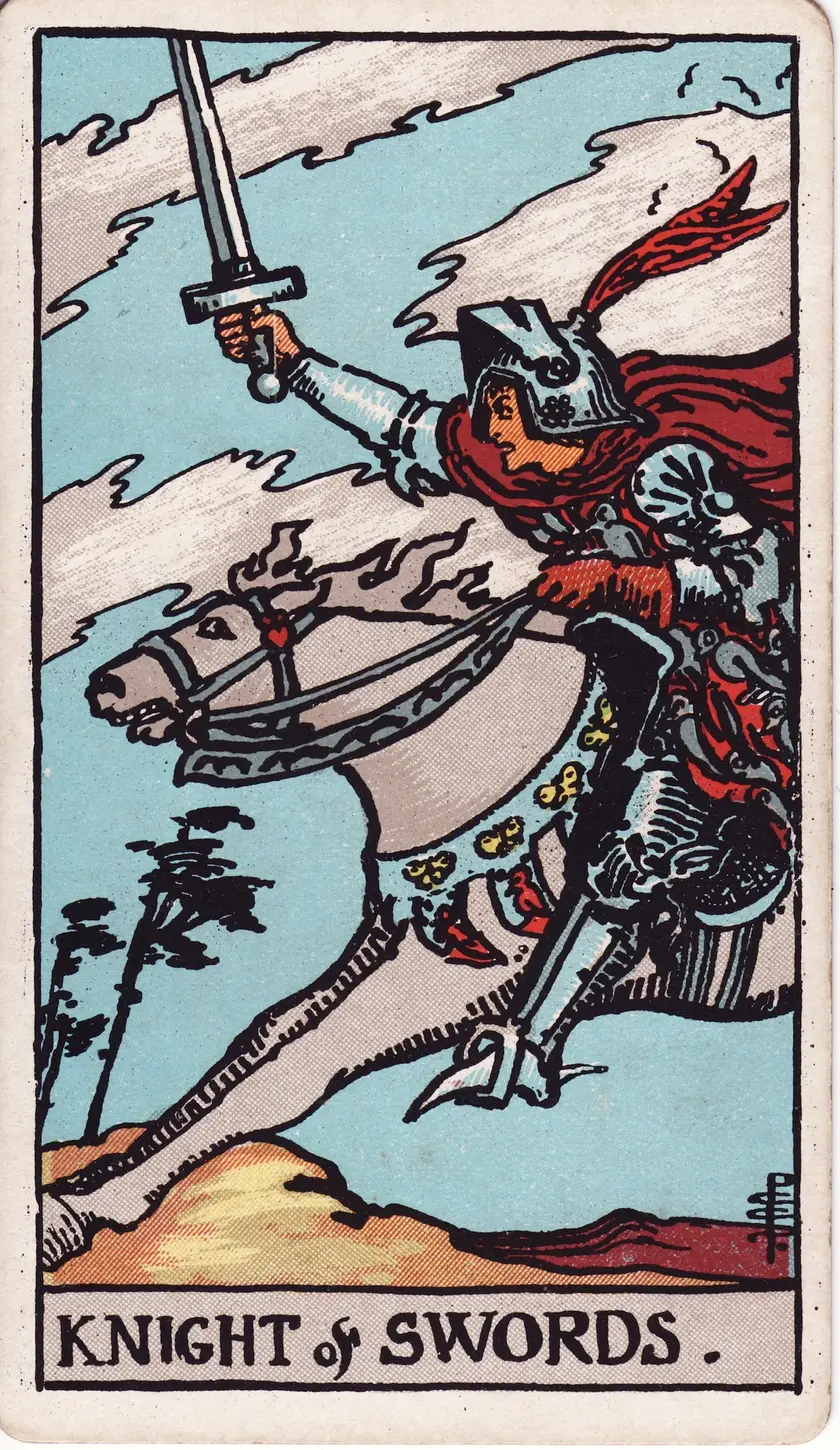 Knight of Swordsambition, fast action
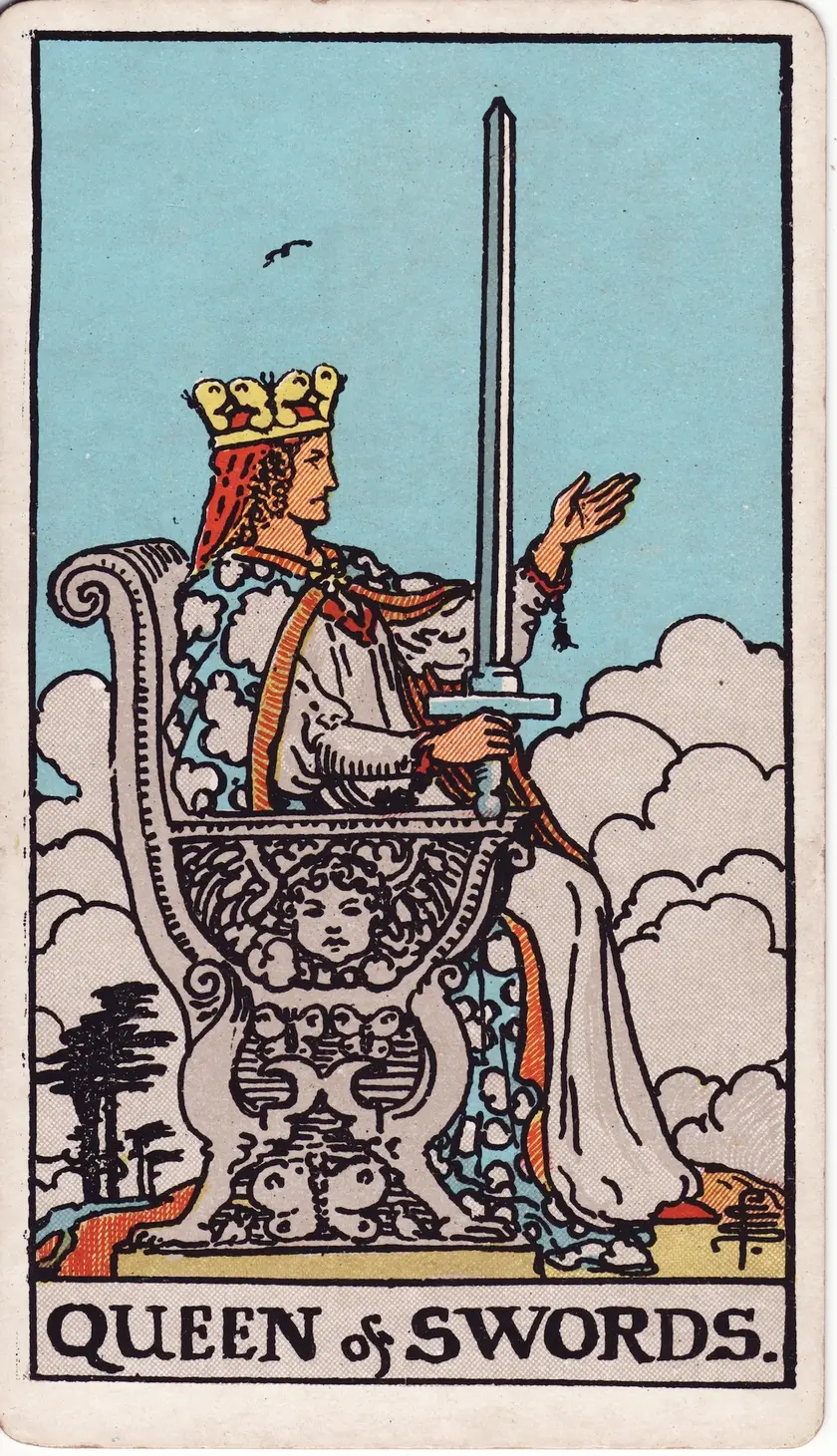 Queen of Swordsclear thinking, independence
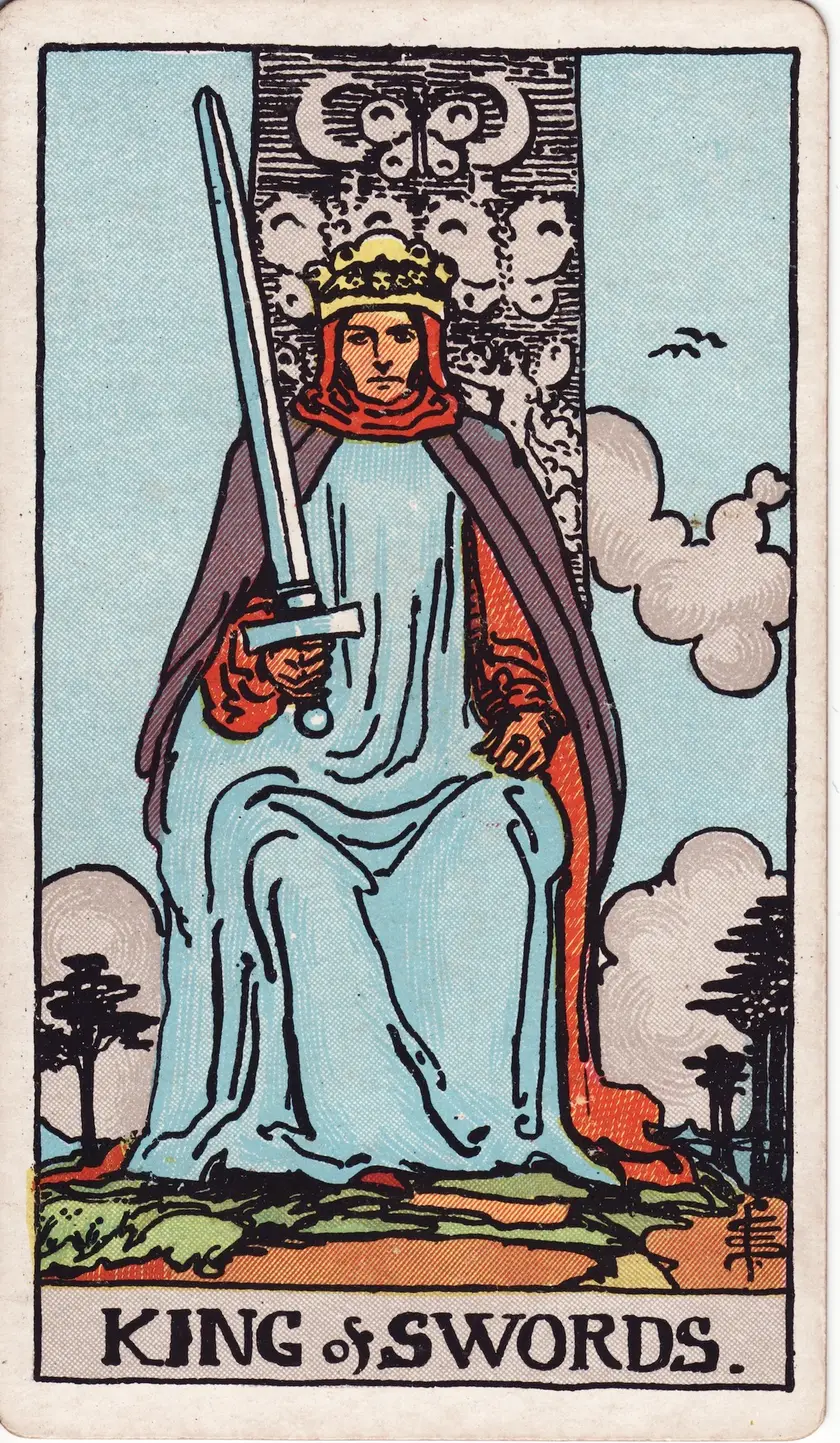 King of Swordsintellect, authority
Reading the Swords in a spread
Swords rarely describe something being done to you; they describe how you are thinking about it. Many Swords in a reading often point to overthinking, a story you keep telling yourself, or a truth that needs saying out loud.
The hard Swords cards are read honestly on Unfold: the Ten of Swords is an ending, not a threat, and the Nine is worry, not a prediction. Reversed Swords often show a thought loosening its grip, or a truth avoided.
Each card page describes the 1909 picture, the upright and reversed meanings, how the card tends to land in questions about love, work and money, and one everyday sign to watch for.