The Major Arcana in order
2 October 2026 · 6 min read · by Unfold editorial
The Major Arcana are the 22 numbered cards of the deck, the Fool at zero and the World at twenty-one. Read in order they tell one story, sometimes called the Fool's path: an innocent sets out with everything in a bundle and, card by card, meets the figures and forces that make a life. Knowing the order is the fastest way to understand why a Major card in a reading feels heavier than the cards around it. It is a chapter, not a scene.
This is the path in brief, in three movements, with what each card tends to mean when it lands in a draw.
The first movement: setting out (0 to 7)
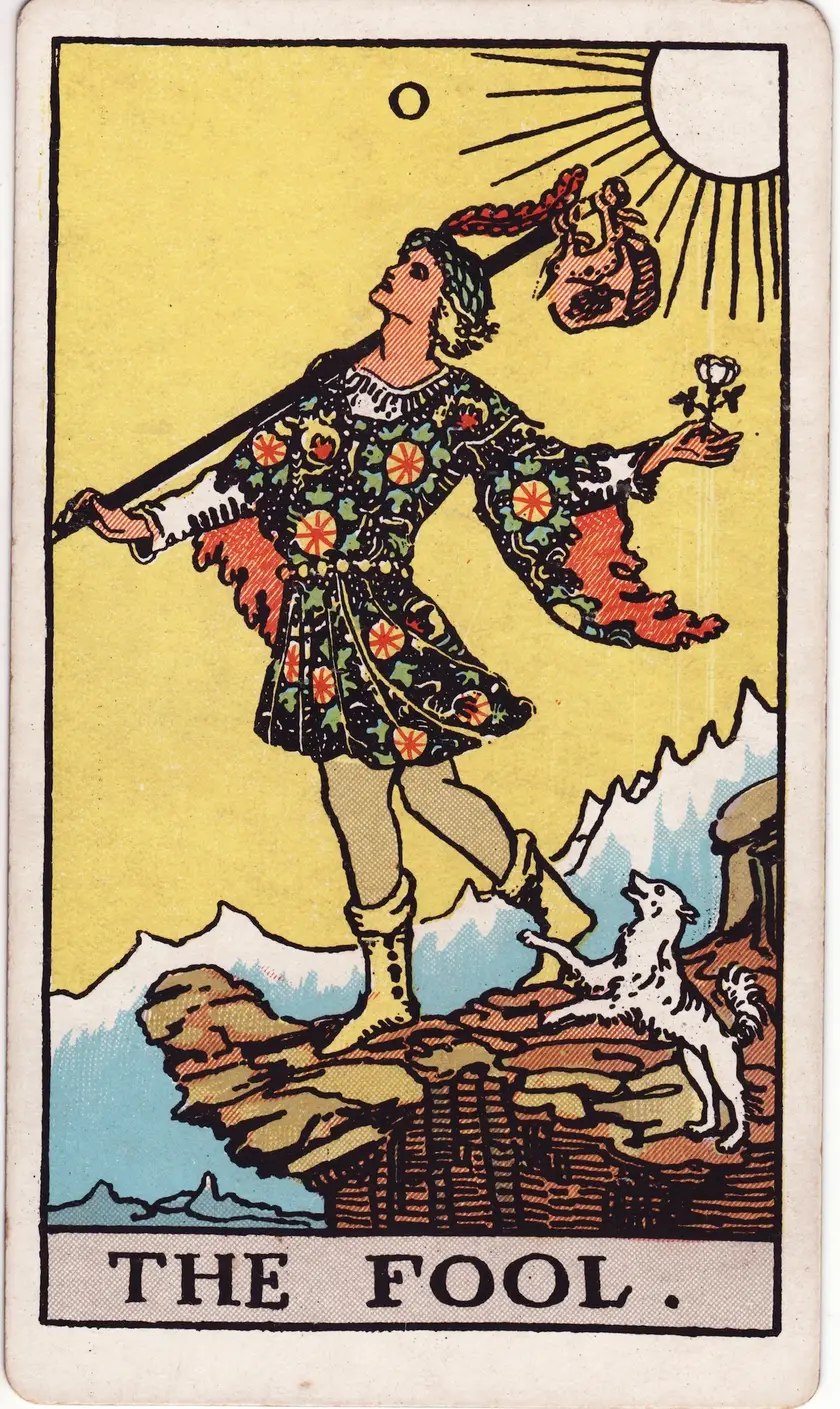
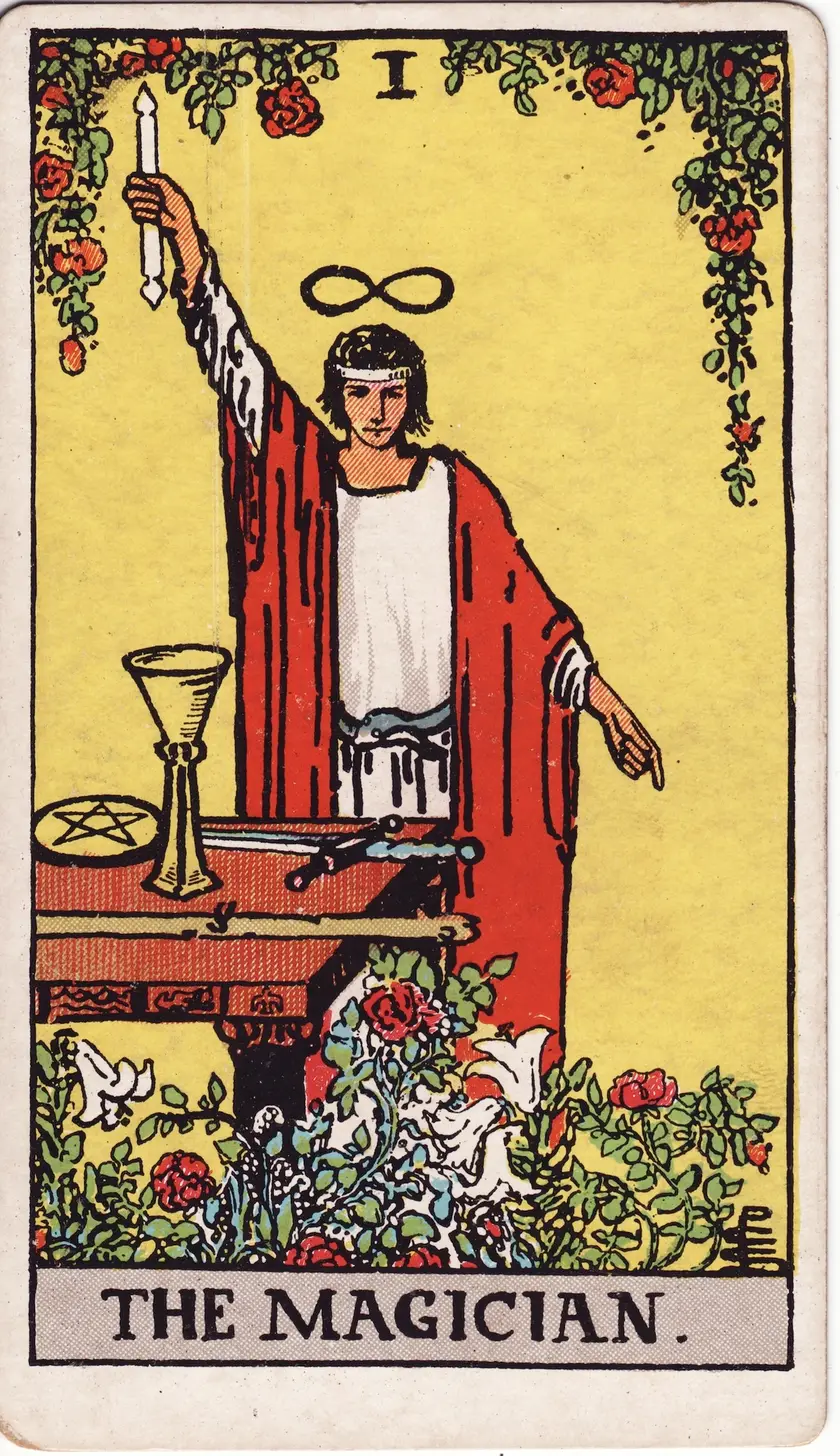
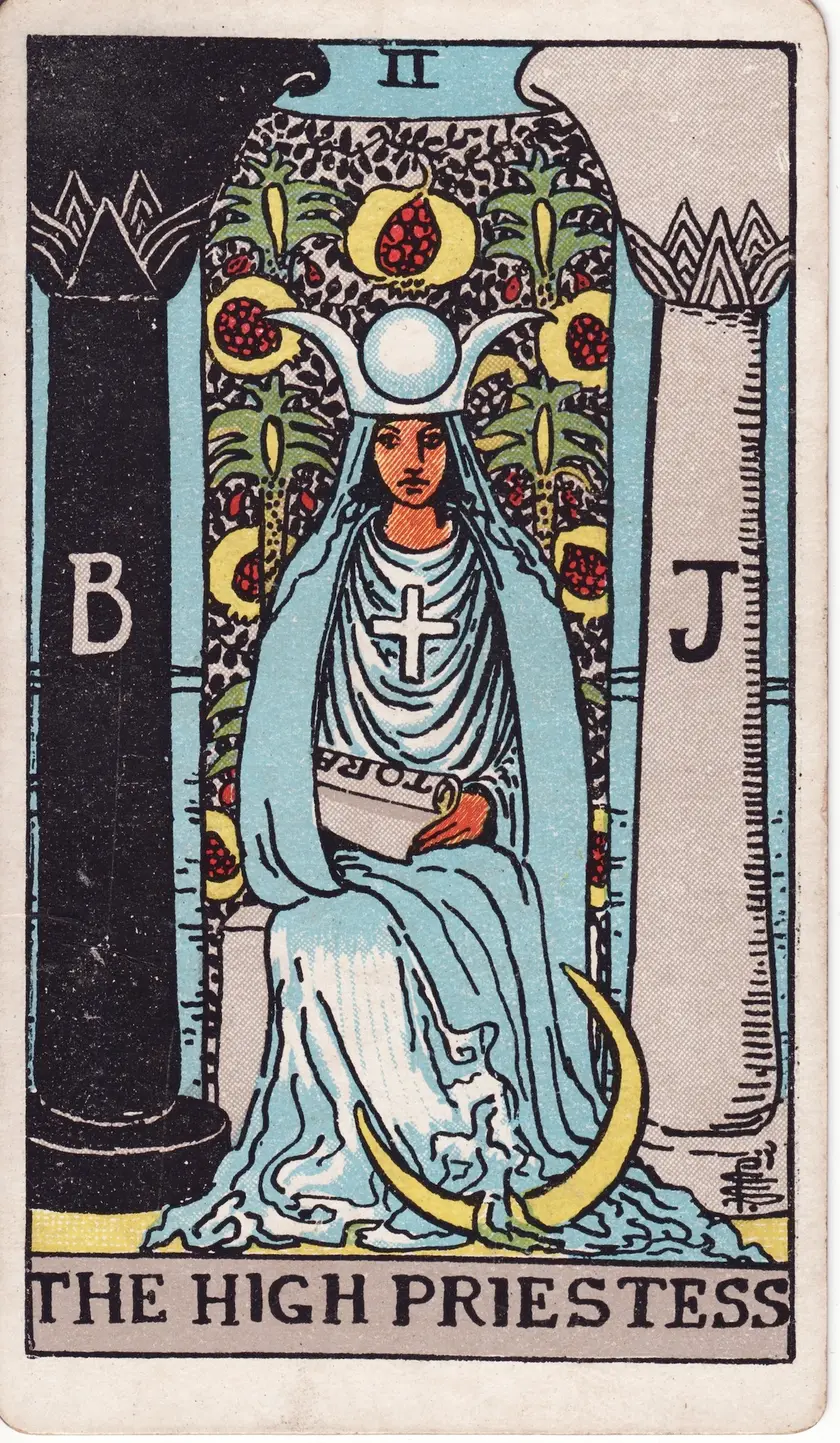
The Fool (0) steps off the edge with a dog at his heels and a rose in hand. In a reading he is a beginning, a leap, a yes said before all the facts are in. The Magician (1) has the four suits on his table and one hand raised: the moment of having what you need and knowing it. The High Priestess (2) sits between two pillars with a scroll she does not open; she is what you know without being able to say how.
The Empress (3) is growth, comfort, making; the Emperor (4) is structure, rules, the throne that holds things in place. The Hierophant (5) is the tradition you were taught, for better or worse. The Lovers (6) is a choice made with the whole self, and reversed, the choice avoided. The Chariot (7) is sheer will: two sphinxes, no reins, and a driver who moves them anyway. The first movement ends with the Fool having learned to want and to drive.
The second movement: the inner work (8 to 14)
Strength (8) is a woman closing a lion's mouth with her hands, and the card means that kind of strength: patient, unforced. The Hermit (9) withdraws with a lamp; he is the retreat that is needed, and reversed, the one that has gone on too long. The Wheel of Fortune (10) turns whether you push it or not, and in a reading it is the thing that changed that you did not change.
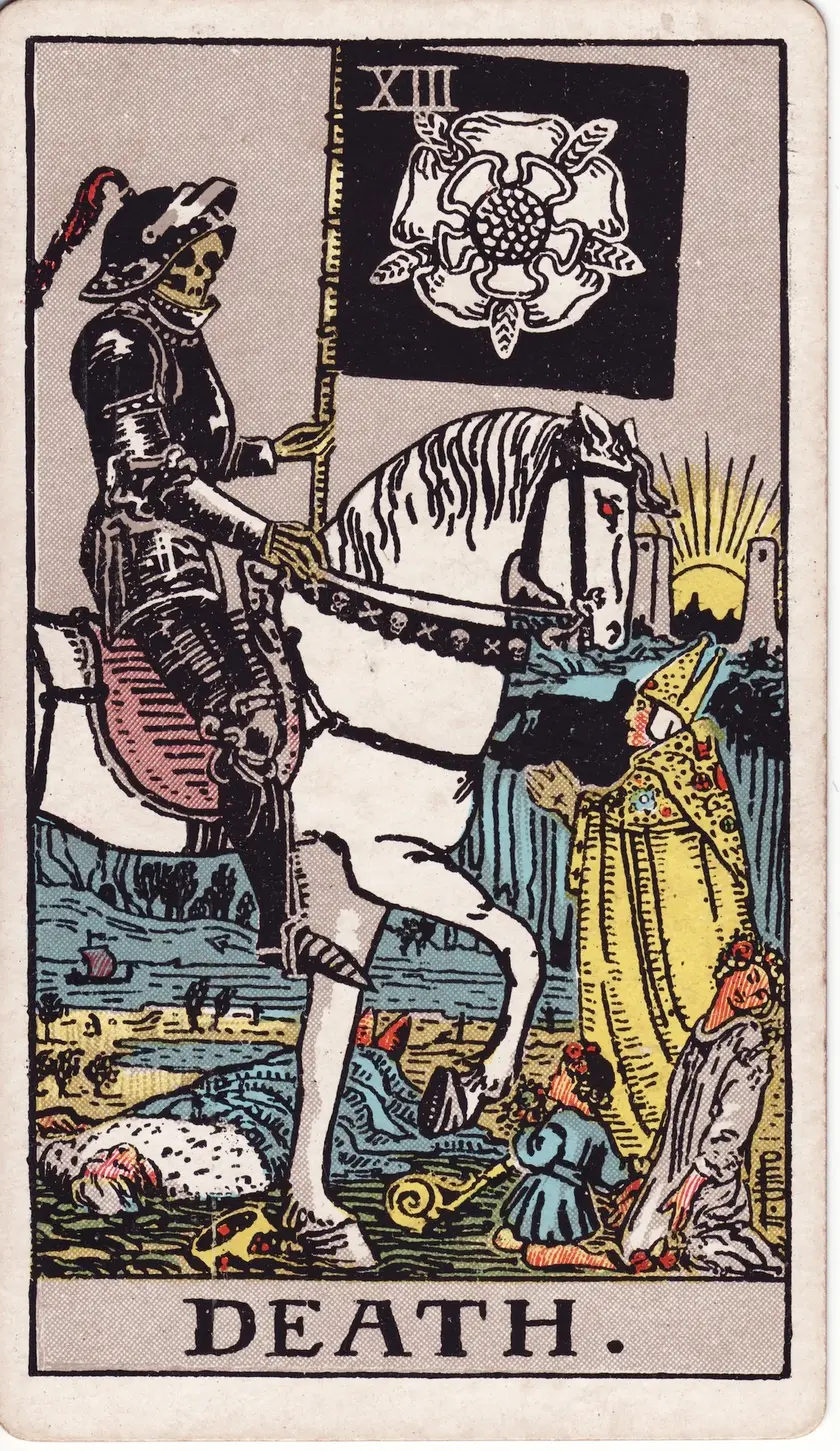
Justice (11) weighs; the Hanged Man (12) hangs by one foot, calm, seeing everything upside down, and asks you to wait. Death (13) is the card people fear and the one that almost never means what they fear: it is an ending, a clearing, the field after the harvest. Temperance (14) pours water between two cups and is the slow mixing that follows. The second movement is the Fool learning that not everything can be driven.
Try it on a real draw
A free three-card reading, written for your question, with a check-in a week later.
Ask the cardsThe third movement: the dark and the light (15 to 21)
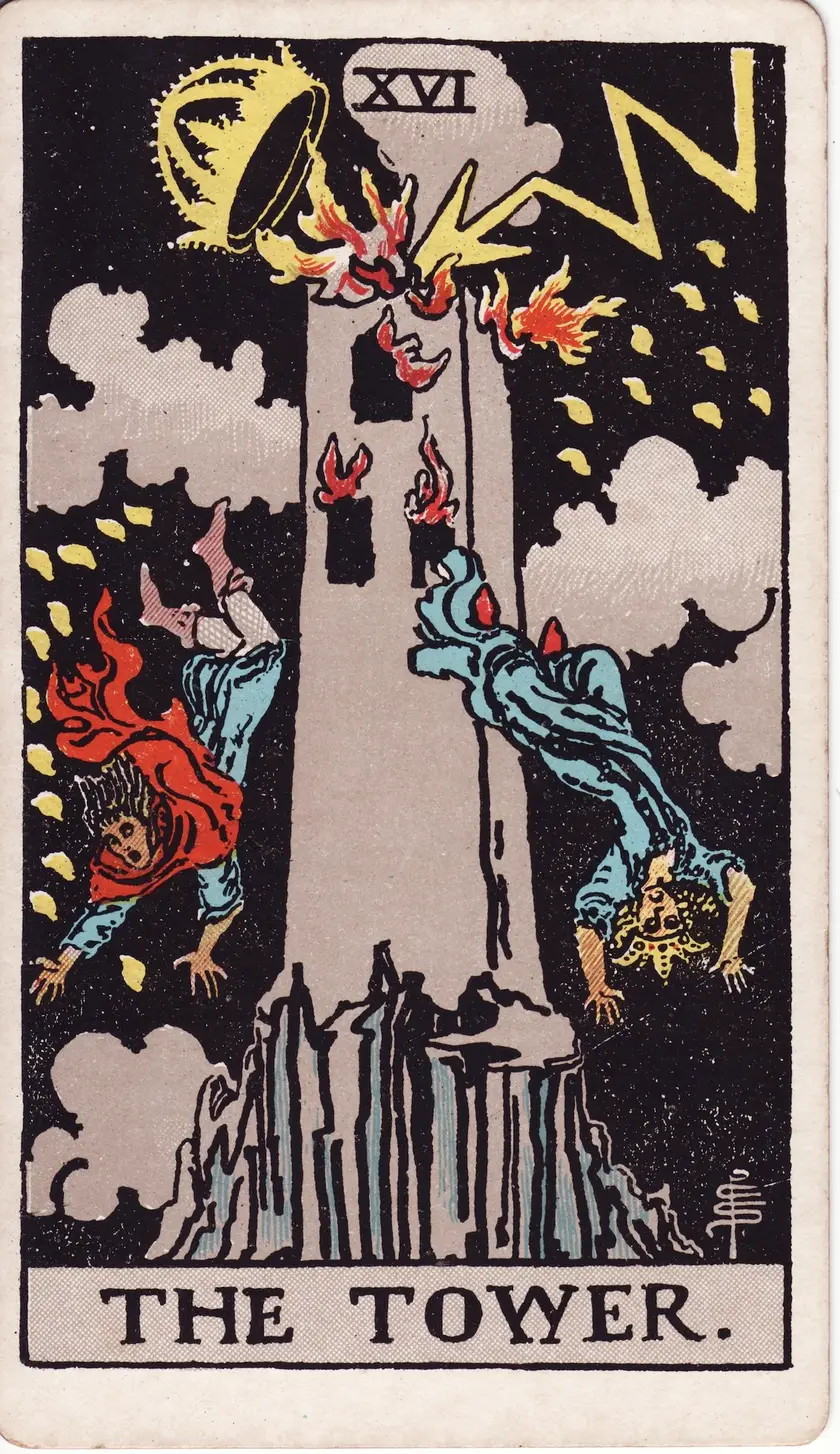
The Devil (15) is a chain loose enough to slip, and the people in it have not noticed. It is habit, dependence, the thing you keep choosing. The Tower (16) is the lightning that takes the crown off: a structure built on something false, coming down. These two together are the hardest stretch of the path, and the three cards after them are the reason the path is worth walking.
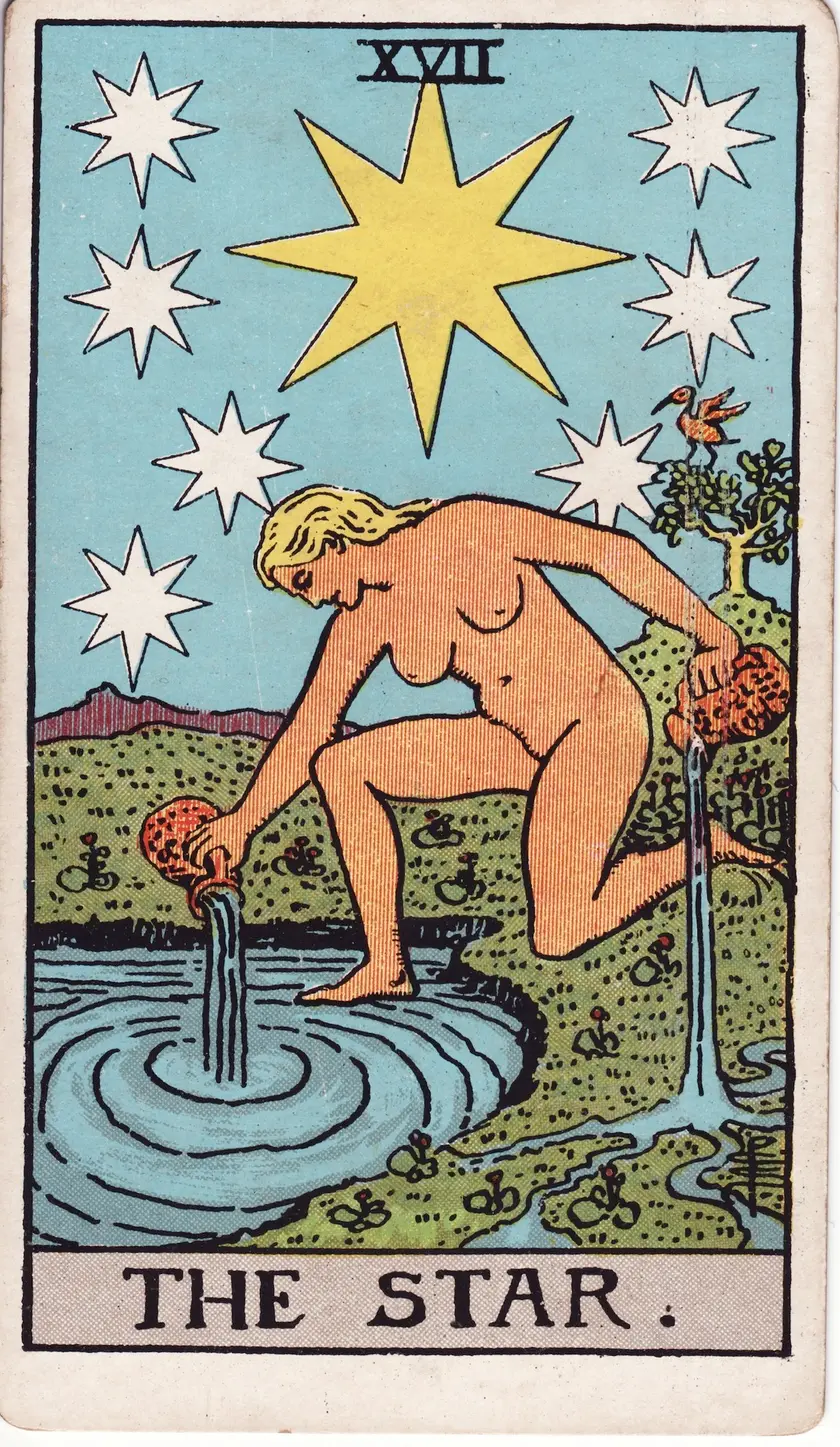
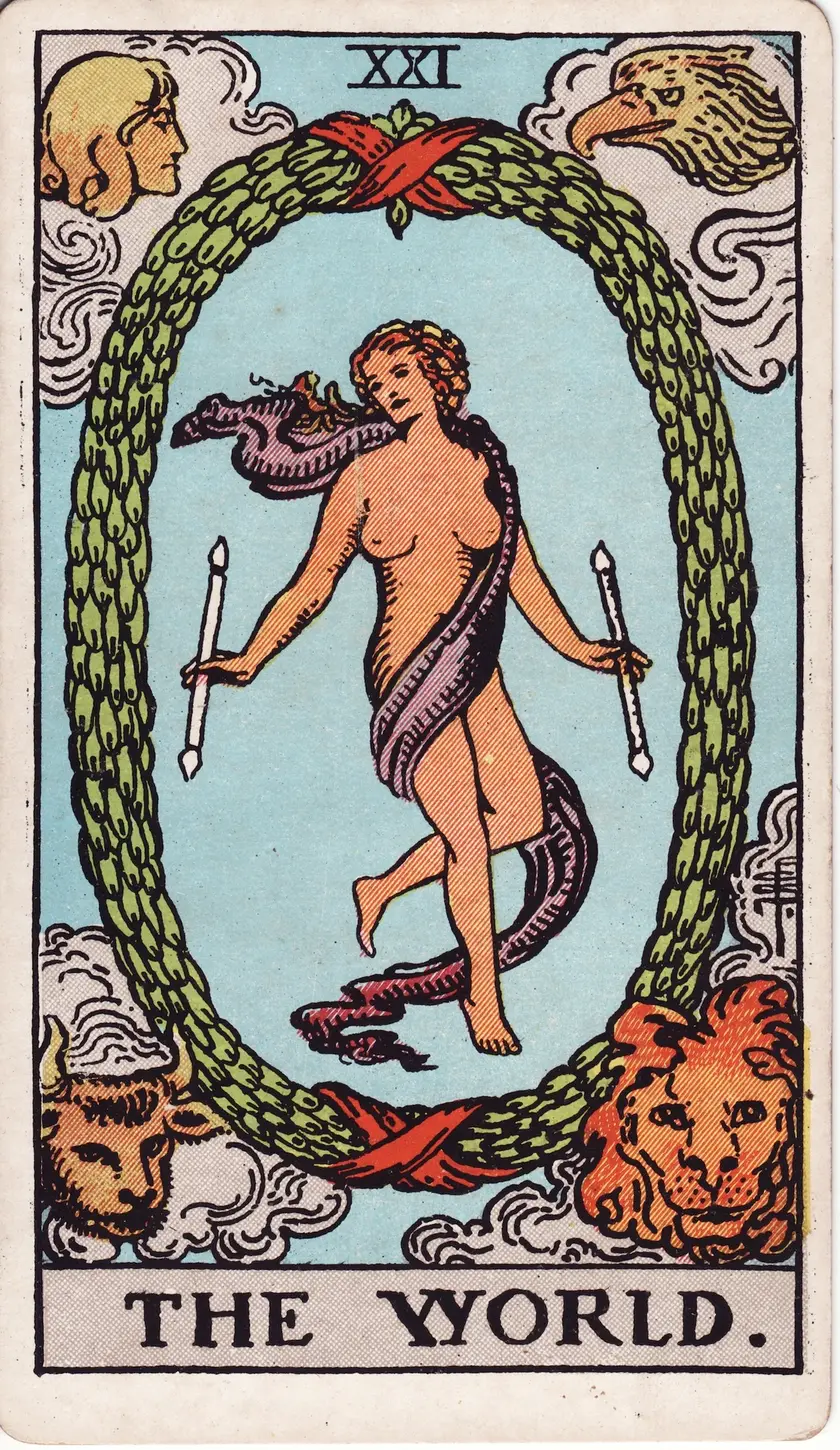
The Star (17) kneels by the pool and pours; she is hope after the Tower, quiet and real. The Moon (18) is the night walk between two towers with a dog and a wolf howling: uncertainty, the fear that has no object, the path you cannot quite see. The Sun (19) is the child on the horse, and it means what it looks like. Judgement (20) is the angel's trumpet and the figures rising: the call to become who you already are. The World (21) dances inside the wreath, and the path is complete, until the Fool steps off again.
What a Major means in your draw
One Major among Minor cards is the chapter title: whatever the question, this card names the theme the question belongs to. The Minors around it say how the theme is playing out this week. Two or three Majors in a three-card draw say the situation is larger than it looks, and probably older.
Readers sometimes say a Major describes something that "has to happen". That is prediction dressed up. A Major describes something that matters; whether it happens, and how, is still yours. The Tower in a draw about a plan does not say the plan fails; it says the plan rests on something that is not there, and it would be good to find out what before you build.
Reversed Majors are read as the theme turned inward, delayed or resisted, not as its opposite. The Hermit reversed is isolation that has stopped working; the Lovers reversed is a choice you are not making; the Tower reversed is the collapse you are holding in.
Using the order when you read
If two Majors appear in one draw, notice which comes first on the path. Death before the Star is the usual order: an ending, then hope. The Star before Death, in Past and Future positions, can read as hope that has not been earned yet, with the ending still to come. The path is not a rule, but it is a map, and a map helps.
Each of the 22 has its own page in the Major Arcana section, with the picture described, the upright and reversed meanings, and one sign to watch for in everyday life.
Three Majors that are read backwards most often
Death is the first. It is the card people dread and the one that almost never describes a death; it describes an ending that clears ground, and in the Past position it is usually something you are relieved is over. The second is the Devil, which is not evil but habit: the chains in the picture are loose enough to lift off, and the card's point is that the figures have not tried. The third is the Hanged Man, read as punishment when it is a choice: he hangs by one foot, calm, with a halo, and he is there because the view from upside down is one he could not get standing up.
Each of these is a card that reads as a warning and means an invitation. If one of them lands in your draw, read the picture before the name.
The Fool as the person asking
A useful habit when a Major appears is to ask where on the path the Fool is standing: that is, where you are. The Magician says you have the tools and are about to begin; the Hermit says you have gone inward and it is time to decide whether to stay; the Star says the worst is past and the question is what to hope for now. The path is a story everyone walks more than once, in pieces and out of order, and a reading is a way of finding your place on it this week.
That is why the order matters more than any one card's keywords. Twenty-two keywords is a list. Twenty-two cards in order is a life.