Tarot and anxiety: when to put the cards down
2 October 2026 · 6 min read · by Unfold editorial
For a lot of people a tarot reading is a calm ten minutes: a question held still, three pictures, a sentence to carry. For some, on some days, it is the opposite: the fourth draw of the evening on the same question, a hard card read as a sentence, a reading checked against another app to see if it agrees. The cards are the same. What has changed is what they are being used for.
This article is about telling those two apart, and about what to do when the cards have become a way of feeding worry rather than holding it. It is written by people who make a tarot app, which is exactly why it needs saying.
A steadying habit and a feeding one
A steadying reading has a shape: a question, a draw, a pause, one thing to do. It ends. You leave with slightly more than you came with, and you do not need to check it against anything.
A feeding reading does not end. It is drawn again because the first answer was not reassuring enough, or read again because the Tower might mean something else, or followed by a yes/no card to settle what the three cards left open. The question is usually about someone else, or about an outcome you cannot affect, and the reading is being asked to supply certainty it does not have.
The simplest test is what happens after. If you close the reading and feel steadier, it was the first kind. If you close it and open another, it was the second.
Signs it has tipped
- Drawing more than once on the same question in a day.
- Asking the cards about someone else's feelings or choices, repeatedly.
- Reading a hard card as a verdict about the future rather than a description of now.
- Checking a reading against a second app or reader to see if it agrees.
- Feeling worse after most readings and drawing again anyway.
- Making a decision you would not otherwise make because a card said so.
None of these is a crisis on its own. Together, or for more than a few days, they mean the cards have become part of the worry rather than a break from it.
Try it on a real draw
A free three-card reading, written for your question, with a check-in a week later.
Ask the cardsWhat Unfold does on purpose
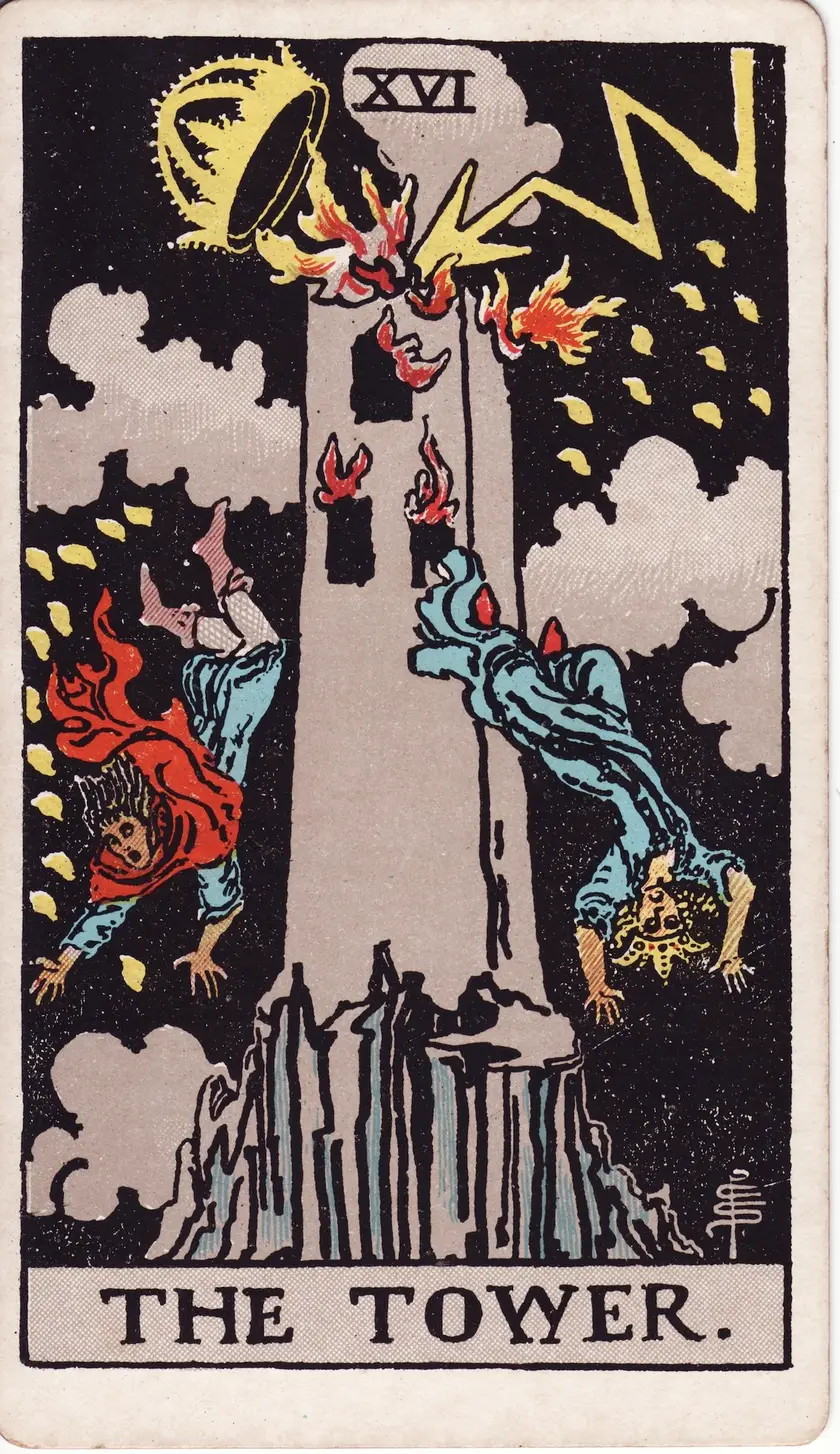
Some of the app's rules exist for this reason. There is a daily limit on readings, and the limit is a feature. There is one daily card, locked until midnight, so there is nothing to re-draw. The reading never predicts and never gives dates, so it cannot supply the certainty a worried mind is looking for, and it cannot be checked against the future. Hard cards are read honestly but never as sentences: the Tower is a collapse, not a doom.
If a question suggests someone may be in danger, no cards are drawn at all; the page shows crisis support instead. That is a rule we would rather over-apply than under-apply.
Putting the cards down
When you notice the feeding pattern, the move is not to resolve the question; it is to stop asking the deck. Write the question down on paper. Note that you have asked it, and what the last reading said. Then do something with your hands for twenty minutes. The question keeps; the loop does not.
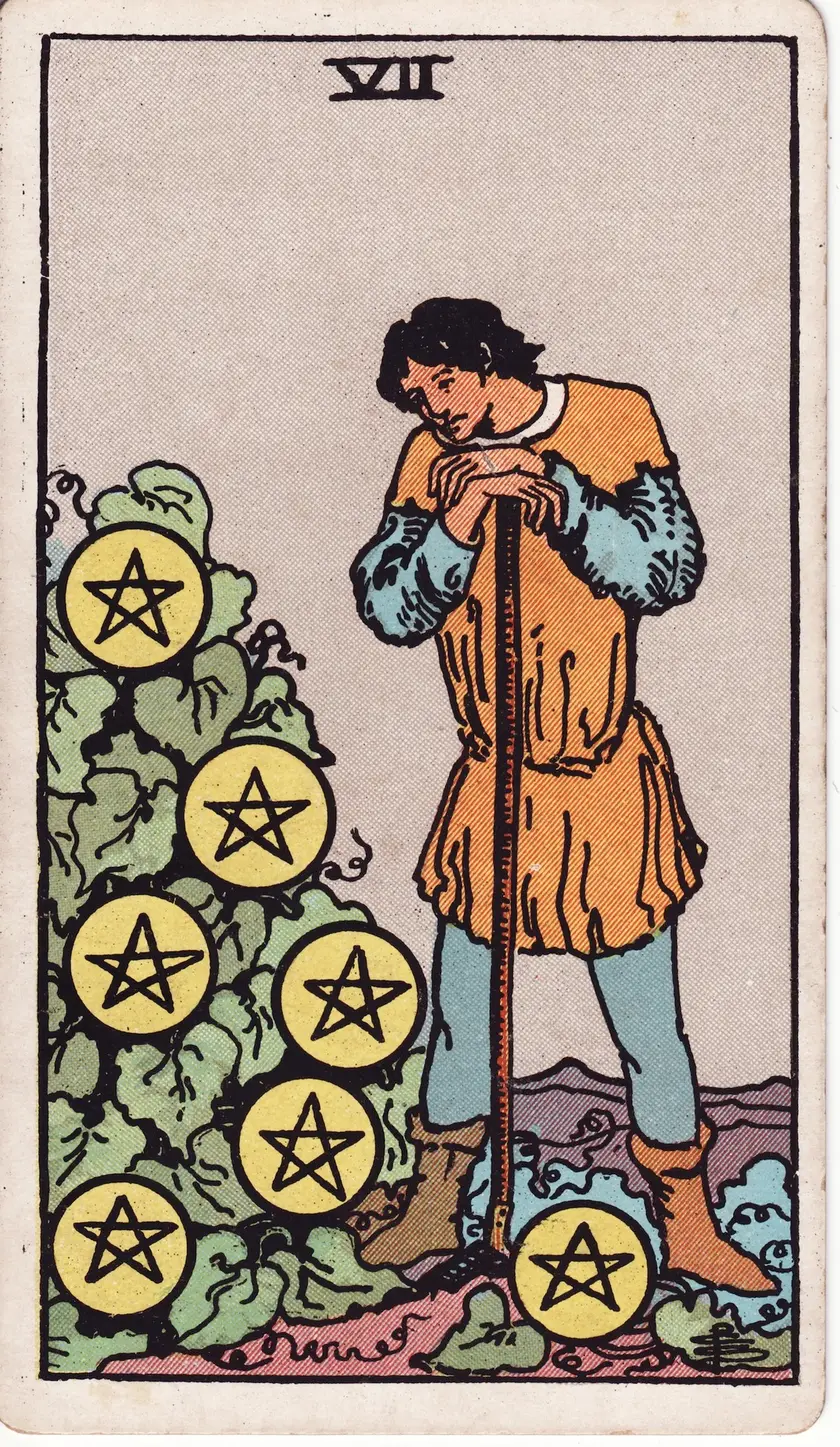
If the question is about another person, the honest reading is always the same: the cards cannot see inside them, and the useful question is what you are doing with the not-knowing. If the question is about an outcome, the Seven of Pentacles is usually the right card whether or not you drew it: it is growing, and watching it does not make it grow faster.
When the cards are not the right tool
Tarot is for reflection. It is not for a decision about your health, a legal matter or your money, and Unfold reads those questions for feeling only and sends the decision to a professional. It is also not a substitute for talking to someone when the worry has stopped being about one situation and become the weather.
If you are anxious most days, or the worry is affecting sleep, work or the people around you, a doctor or a therapist is the right next conversation, and the cards can wait. If you are in crisis or thinking about harming yourself, please contact your local emergency number or a crisis line now; in the UK the Samaritans are on 116 123, in the US you can call or text 988, and the International Association for Suicide Prevention lists lines in other countries. A reading is never the thing to reach for first.
Coming back to the cards
Nothing in this means stopping for good. When the loop has loosened, the cards are what they were: a quiet ten minutes with a question. Come back with one question a week, draw once, write down the one thing to watch for, and let the check-in ask you how it went. That shape, question, draw, pause, check, is the whole of what a tarot habit can do for you, and it is a lot.
Why hard cards feel like sentences
The Tower, Death, the Ten of Swords, the Devil: four cards, out of seventy-eight, do most of the frightening. They frighten because they are pictures of things actually happening, lightning, a skeleton, a man face down with blades in his back, and a worried mind reads a picture as a forecast. The cure is to read what the picture is for. The Tower is a structure built on something false, coming down, which is a description of a situation most people recognise once they stop reading it as a threat. Death is the harvest: the field is clear because the crop is in. The Ten of Swords has the sun rising behind it, and the man's hand makes a sign of blessing. The Devil's chains lift off.
On Unfold these cards are read honestly, as change, endings, release and habit, and never as sentences. If a reading of one of them has frightened you, re-read the card's own page, which describes the picture first, and notice how different it is from the feeling.
A gentler way to use the cards on a bad day
Draw one card, not three, and do not ask a question. Look at the picture for a full minute before reading a word. Say what the figure is doing. Then put the card down and do the next thing in your day. That is a reading, and it is all the cards can honestly give to a mind that is looping. Three cards and a question can wait for a steadier afternoon, and the daily card exists for exactly this: one picture, no re-draw, nothing to chase.