Reading the Celtic Cross, position by position
2 October 2026 · 6 min read · by Unfold editorial
The Celtic Cross is the reading people graduate to when three cards keep leaving something out. Ten cards, each with its own question, laid as a cross of six and a staff of four. It is the most famous spread in tarot and the one most often read badly, because ten cards is a lot, and the easy mistake is to read them one after another like a list.
This article walks the ten positions in order, then the pairs that matter, then the shape of the whole. It is the method Unfold uses for its Deep Reading, written down.
The cross: the situation itself
1. The Present. The heart of the matter, the card everything else is read against. Read it first and read it slowly.
2. The Challenge, laid across the Present. Not a separate problem: the thing lying across the heart of the situation. A gentle card here over a hard Present says the difficulty is smaller than the mood around it. A hard card over a gentle Present says the situation is fine and one thing is in the way.
3. The Past, to the left. What lies underneath: the cause, the history, the thing that set this up. 4. The Future, to the right. What is fading in as the situation moves, read as direction, never as event.
5. Above. The conscious goal: what you say you want. 6. Below. The subconscious driver: what is actually moving you, which you may not have named. When these two are the same card in different clothes, you know yourself well. When they argue, the reading has found its subject.
The staff: you inside it
7. Advice. The posture the cards suggest. This is often the most practical card in the spread and the one to act on.
8. External influences. The room you are standing in: the people, the circumstances, the weather of the situation. It is where other people appear in the reading, as influences on you rather than as predictions about them.
9. Hopes and fears. One position for both, because they are so often one thing. The card that most makes people go quiet, and the one worth sitting with longest.
10. Outcome. Where the whole thing may be heading if the present course holds. It is read last and read lightly. The point of the other nine cards is that the course can change.
Try it on a real draw
A free three-card reading, written for your question, with a check-in a week later.
Ask the cardsThe pairs to read together
A ten-card reading becomes a reading rather than a list when the cards are read in pairs. These five do most of the work.
- Present and Challenge (1 and 2): the situation and what crosses it. Always first.
- Above and Below (5 and 6): what you want and what drives you. The honesty check.
- Past and Future (3 and 4): the three-card spread hiding inside the Celtic Cross, with the Present in the middle.
- Advice and Outcome (7 and 10): what to do and where that leads. If the Outcome worries you, the Advice card is the one that changes it.
- Hopes and fears against the Present (9 and 1): is the thing you dread already here, or only in the forecast?
On Unfold these five pairs are written as their own section, "How the cards speak to each other", and the reading is checked for having all five.
Patterns across the ten
With ten cards, patterns appear that three cannot show. Count the suits: six Cups say the question is emotional whatever it was called. Count the Majors: three or more say the situation is a chapter, not a week. Count the reversals: half the spread reversed is a situation that has not been able to move, and the reading should spend its time on what is in the way. Notice repeated numbers: two Fives are conflict in two places at once; two Tens say something is finishing.
Write the pattern down before you write the reading. It is the sentence the ten cards are trying to say, and once you have it the individual cards fall into place around it.
Keeping it from becoming a list
Three habits. Read the Present card for a full minute before you look at anything else. Read the pairs before the positions. Say the pattern in one sentence before you say anything about card nine.
And know when not to use the spread. A simple question in a Celtic Cross produces a reading that invents complexity to fill ten positions. If the question fits in one sentence and has a before and after, three cards do it better.
How Unfold writes a Celtic Cross
A Deep Reading on Unfold is written in two passes. The first pass outlines the spread: the five pairs, the pattern, how many Majors and reversals. The second writes the reading from that outline in the five steps of the Unfold Method, picture first. Two clarifier cards can be drawn afterwards, one for the Challenge and one for the Outcome, when either of those is the card you cannot stop looking at. The reading takes two credits, and a check-in comes a fortnight later. The Celtic Cross page has each position described, and the spread itself.
A worked pair: Above and Below
Take a question about whether to leave a job, with the Ten of Pentacles Above and the Fool Below. Above is the conscious goal, and the Ten says the person wants security, legacy, the long-built thing. Below is what is actually driving them, and the Fool says they want to leap. Neither card is wrong. The reading's job is to say that the person is telling everyone they want stability while something in them has already packed a bag, and to ask which of the two the decision should be made for.
This is the pair that most often turns a ten-card reading from description into insight, and it is the one worth reading twice.
The clarifier cards
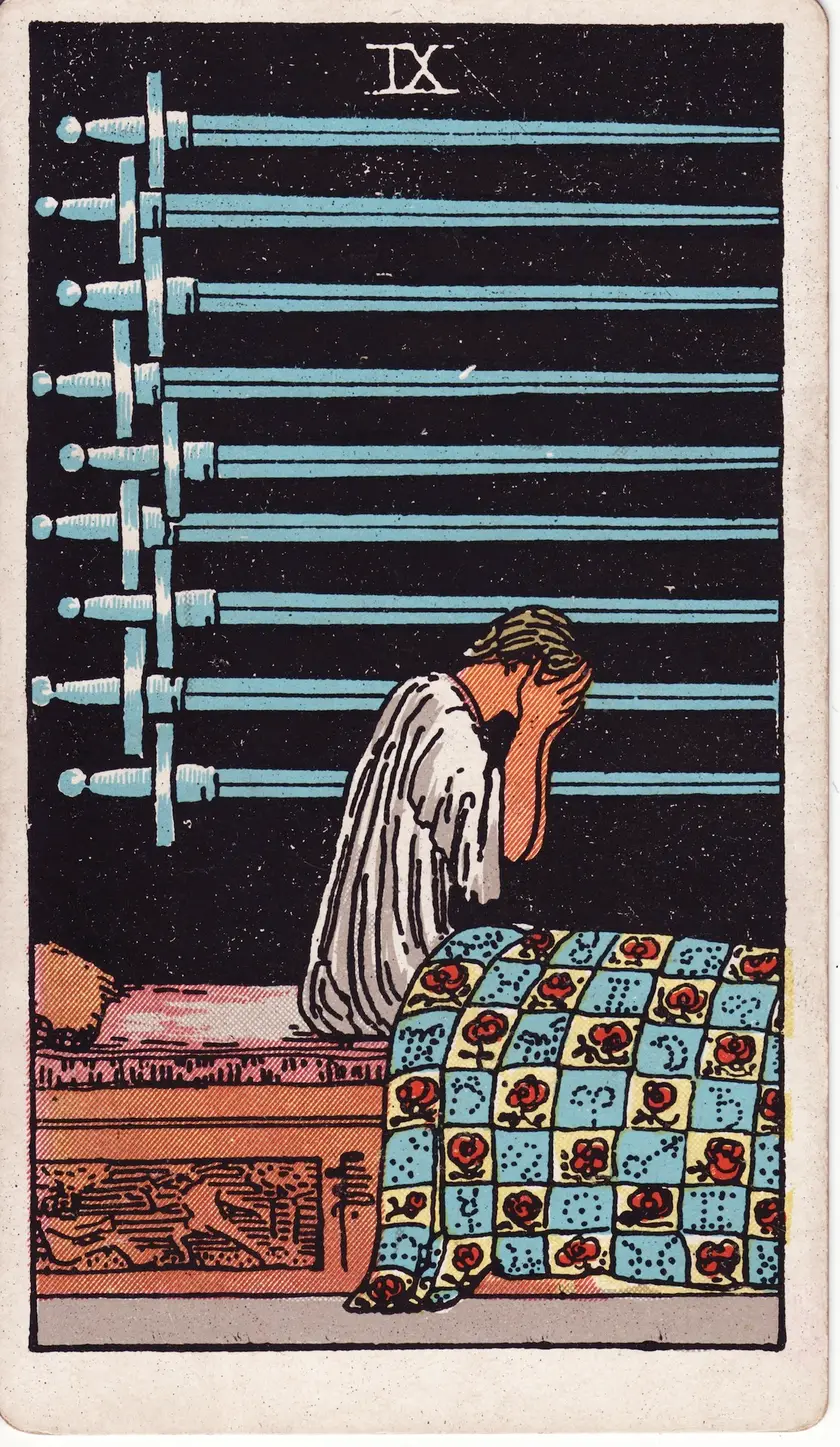
After a Celtic Cross there are usually one or two cards you cannot stop looking at, and they are nearly always the Challenge or the Outcome. A clarifier is one extra card drawn for one position, read as a comment on it rather than a replacement. The Tower in the Outcome with the Star as its clarifier is a collapse with hope on the far side; the Tower with the Nine of Swords is a collapse that is mostly being imagined. On Unfold two clarifiers are available for exactly those two positions, drawn from the same deck, and read against the card they clarify.
Resist clarifying more than that. A clarifier for every position is a second spread laid on top of the first, and the reading loses the thing that made it a cross.